
how to fold and store a folding saw safely comes down to two things: controlling the blade path so it can’t bite you, and keeping the teeth protected so they don’t get dulled, rusty, or snagged in your gear.
If you’ve ever had a folding saw half-open inside a pack, or found surface rust after one wet trip, you already know why this matters, it’s a small tool that can cause a big cut, and a sharp blade that gets ruined fast when stored sloppy.
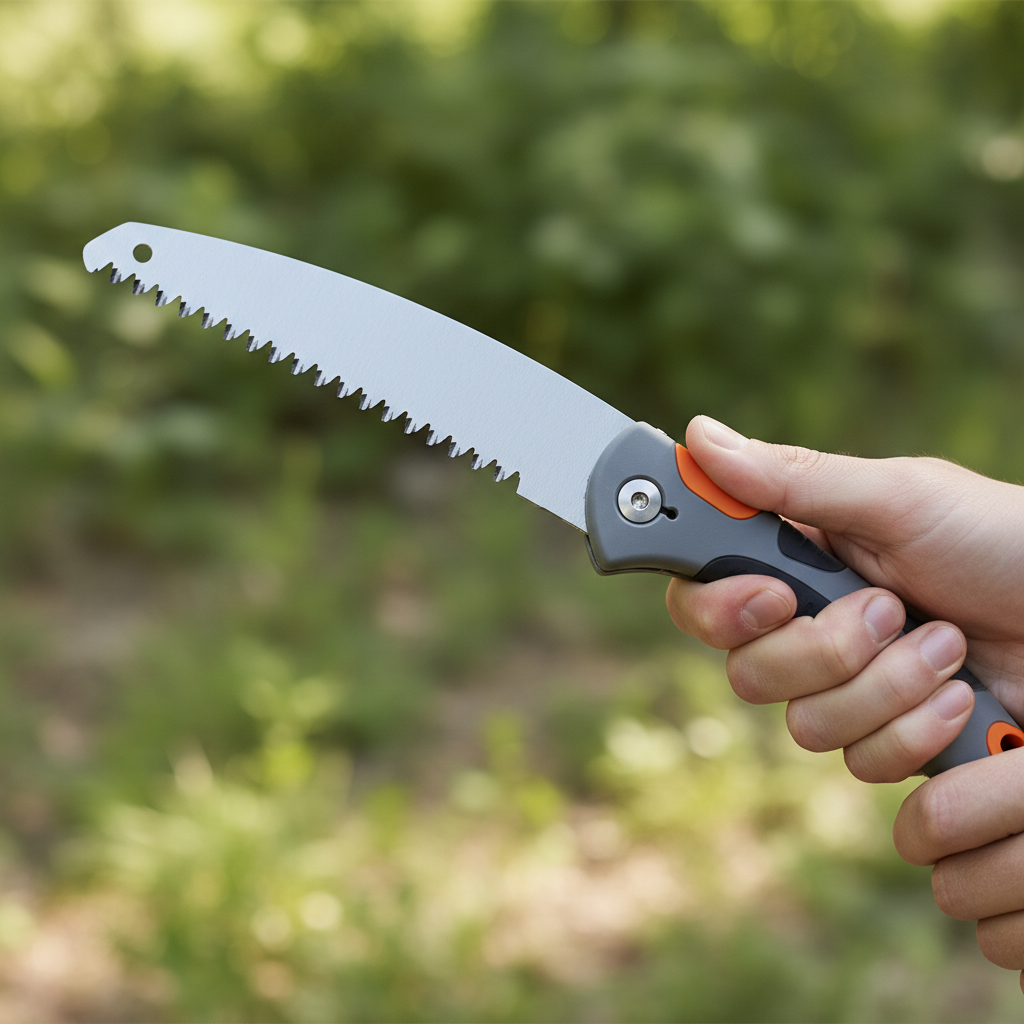
There’s also a common misconception that “closed” automatically means “safe.” In real use, locks wear, grit jams pivots, and teeth still scratch things through fabric, this guide walks you through practical, repeatable habits so your saw stays safe in hand and safe in storage.
Before you fold: set yourself up to avoid slips
Most accidents happen during transitions, opening, closing, handing the tool off. Folding is the moment your fingers drift toward teeth, or your hand loses grip when sap and sawdust build up.
- Stop cutting and stabilize the work. Set the branch down or step back from it, don’t fold while balancing a log with your knee.
- Clear the blade line. Knock off chips, wipe sap if you can, a gummy blade makes your hand over-squeeze.
- Look for the lock. Identify the lock release, button, lever, or liner lock, and keep your other hand out of the closing path.
According to OSHA, hand tools should be kept in good condition and used as intended, which includes guarding cutting edges and maintaining tools to reduce injury risk, that general principle applies well to folding saws even outside job sites.
How to fold a folding saw safely (step-by-step)
The exact motion varies by brand, but the safe pattern stays consistent, keep the blade controlled, keep your fingers out of the travel arc, and confirm the lock actually engaged.
1) Choose a stable position
Hold the handle with your dominant hand, point the teeth away from your body, and keep the saw slightly in front of you rather than close to your chest, it sounds small, but it buys you reaction time.
2) Release the lock without chasing it
Press or pull the lock using your thumb, avoid pinching the release with fingertips near the hinge. If the lock feels gritty or sticky, don’t force a fast fold, slow down and reset your grip.
3) Start the fold with controlled pressure
Initiate movement until the blade passes the “danger zone” where it wants to snap shut. Some saws have a mid-stop, treat that like a checkpoint rather than a shortcut.
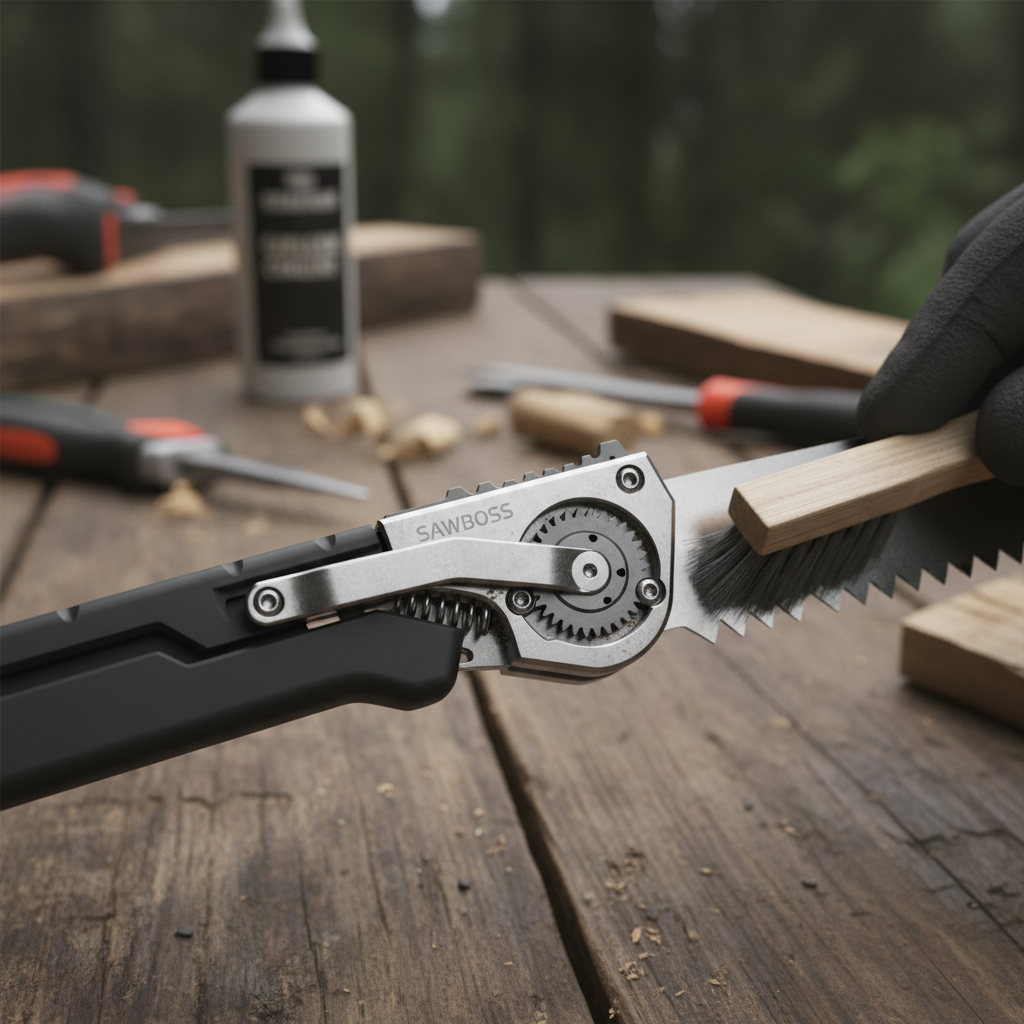
4) Keep the other hand off the blade
A lot of people “assist” the closure by pushing the spine of the blade. That can be fine on some designs, but it’s easy to miss and catch teeth, a safer habit is letting the handle hand do the motion while the free hand stays away.
5) Close fully and verify it’s latched
Close until you feel or hear the detent or lock. Then do a gentle tug test: try to open it slightly without touching the release. If it moves, don’t store it yet, fix the closure first.
Why folding saws open in storage (and what it usually means)
If you’re learning how to fold and store a folding saw, it helps to know the typical failure points, because the fix depends on the cause, not the symptom.
- Worn lock or weak detent: the blade doesn’t “stay put” when jostled, common after years of use or hard grit exposure.
- Debris in the pivot: sawdust and sap prevent full closure, so it looks closed but isn’t seated.
- Improper packing: heavy gear presses the blade spine and nudges it open, especially if the saw sits sideways in a tight pocket.
- Damaged handle scales: cracks or loosened screws change the alignment so the blade rubs and won’t latch cleanly.
If the saw opens even when you’re sure it latched, treat that as a maintenance issue, not a “be more careful” issue.
Quick self-check: are you storing it safely right now?
Use this list before you toss the saw into a pack or garage bin. If you hit two or more “no” answers, your current routine probably causes either injury risk or premature wear.
- Blade fully closed and tug-tested without touching the release?
- Teeth covered by a sheath, guard, or at least isolated from fabric and skin?
- Blade dry to the touch, especially near the pivot?
- No visible sap buildup that will harden in storage?
- Saw stored so other tools can’t press the blade open?
- Lock area moves smoothly, without crunching grit?
How to store a folding saw: 3 common scenarios
“Storage” means different things in a backpack than in a truck, moisture, vibration, and what the teeth can contact all change the best approach.
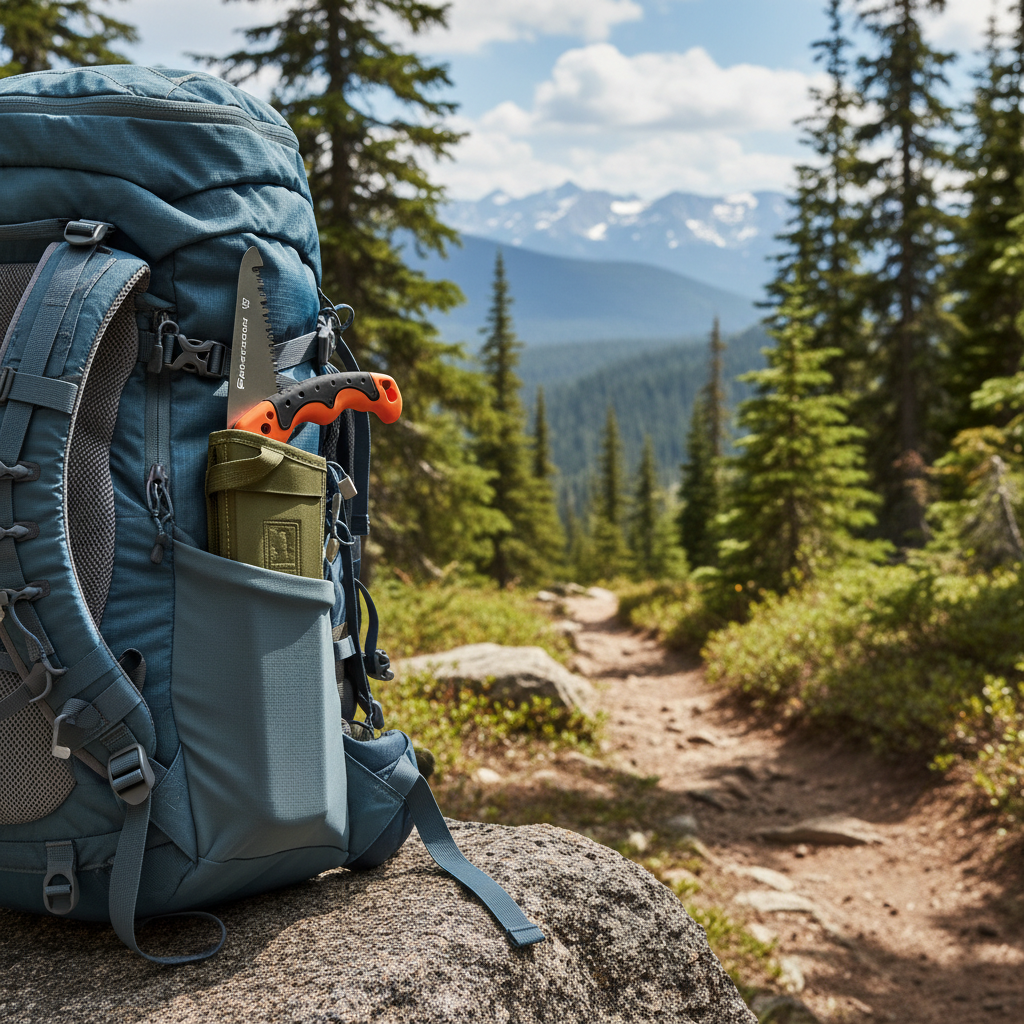
Scenario A: In a backpack or tool roll (hiking, trail work, camping)
- Use a blade cover if you have one. If not, improvise with thick cardboard and tape, avoid thin cloth that teeth can bite through.
- Pack it flat. Place the saw against a rigid surface like a frame sheet or the inside wall of the pack.
- Keep it away from hydration bladders. Slow leaks are a rust factory, even stainless blades can spot-rust in some conditions.
Scenario B: In a garage, shed, or workshop
- Dry first, then store. A quick wipe beats “it’ll air-dry later.” Pay attention to the hinge.
- Hang or bin it so the teeth don’t contact metal. Teeth banging into a shovel head dull faster than people expect.
- Light oil on non-stainless blades can help. Keep it minimal, too much oil attracts dust and gums up the pivot.
Scenario C: In a truck or job box (vibration, heat, dirt)
- Choose a snug compartment. Vibration can work a weak detent open over time.
- Use a hard sheath if possible. It reduces snagging when you reach in fast.
- Inspect more often. Dust plus vibration tends to loosen hardware.
Simple maintenance that makes folding and storing safer
Storage problems often trace back to maintenance that never happens. This isn’t about babying a tool, it’s about making sure the lock works and the blade doesn’t corrode shut.
- Clean the pivot area. Use a dry brush, then a slightly damp cloth if needed, and dry right after.
- Check screws and handle play. If the handle flexes, the blade alignment changes, and closing becomes inconsistent.
- Lubricate sparingly. A drop at the pivot, then wipe excess, keeps motion smooth without becoming a dirt magnet.
- Inspect teeth. Bent or missing teeth can catch on the handle channel, making closure feel “fine” until it slips.
According to CDC, cleaning and maintaining tools reduces injury risk by helping equipment function as intended, it’s a broad safety guideline, but it’s especially relevant with sharp, folding mechanisms.
Storage options compared (what works, what’s overkill)
If you’re deciding what “good storage” looks like, this table keeps it practical. Many folding saws ship with a simple sleeve, that’s often enough, but not always.
| Storage method | Best for | Pros | Watch-outs |
|---|---|---|---|
| Factory sheath / blade cover | Packs, drawers | Protects teeth, reduces snags | Some sleeves trap moisture if stored wet |
| DIY cardboard guard | Occasional use | Cheap, easy, decent tooth protection | Wears out fast, replace often |
| Tool roll pocket | Organized kits | Keeps it separated from other tools | Thin fabric may not stop teeth if saw opens |
| Hard plastic case | Truck boxes, pro use | Best impact protection | Bulkier, easy to ignore cleaning since it’s “contained” |
| Hanging on a wall hook | Workshop storage | Airflow helps drying, quick access | Keep it out of kids’ reach, consider a tooth guard |
Mistakes that cause dull teeth, rust, or finger cuts
Most bad outcomes come from a few repeat offenders. Fix these and you usually fix the whole system.
- Storing it “mostly closed.” A blade that isn’t seated can spring open when grabbed.
- Putting it away wet. Moisture trapped in the handle channel can cause corrosion and sticky pivots.
- Letting teeth rub against metal tools. Dulling from contact is slow, then suddenly obvious.
- Over-oiling. Oil plus dust turns into paste, which makes closing unreliable.
- Using a damaged lock. If the lock feels inconsistent, treat storage as a hazard until fixed.
When to repair, replace, or ask for help
If you’re unsure how to fold and store a folding saw because something feels “off,” trust that instinct. A folding mechanism should feel predictable, not like a guessing game.
- Repair or service if the pivot is gritty after cleaning, hardware won’t stay tight, or the blade rubs the handle channel.
- Replace parts or the saw if the lock fails a tug test, the blade has cracks, or teeth damage makes it bind during closing.
- Seek professional help if you plan to disassemble a saw with a strong spring or unfamiliar lock, some designs can snap unexpectedly, a local tool shop or the manufacturer’s support line can be a safer route.
Key takeaways you can use on your next trip
Safe storage is less about buying accessories and more about consistent checks. Close it with control, confirm it latched, keep teeth covered, and keep moisture out of the pivot, that routine prevents most surprises.
If you want one habit to start today, do the quick tug test every time before packing, and if the saw ever opens in storage, pause and fix the underlying cause instead of just packing it “more carefully.”
FAQ
How do I know my folding saw is fully locked closed?
After closing, gently try to open the blade without touching the release. If it moves at all, it’s not secured, clean the pivot and try again before storing.
Should I oil a folding saw before long-term storage?
Often, a light wipe with a rust-inhibiting oil helps, especially on carbon steel blades. Keep it minimal and wipe excess, heavy oil attracts dust and can make the lock feel unreliable.
Can I store a folding saw in a backpack without a sheath?
You can, but it’s riskier. At minimum, isolate the teeth with a rigid DIY guard and pack it so other gear can’t push the blade open.
Why does my saw feel hard to fold after cutting green wood?
Sap and fine sawdust can gum up the pivot and lock surfaces. Cleaning the hinge area soon after use usually restores smooth action.
Is it okay to rinse my folding saw with water?
Sometimes, yes, especially if it’s muddy, but drying becomes the real job. Dry the blade and pivot thoroughly, then consider a tiny amount of lubricant at the hinge.
What’s the safest way to hand a folding saw to someone else?
Close it first and confirm it latched, then offer the handle, not the blade end. If it must be open, present the handle with the teeth facing away from both of you.
My folding saw opened in my pack once—should I stop using it?
Not always, but treat it as a warning. Clean the pivot, inspect the lock, and test closure repeatedly; if it still opens with normal jostling, repair or replacement is usually the safer call.
If you’re trying to standardize your kit, a simple blade cover plus a quick cleaning routine after each outing tends to be the most “set it and forget it” way to store a folding saw without surprises, especially if you bounce between backpack trips and garage storage.