
The best hedge trimmer for shrubs is usually the one that matches your shrub size, your arm strength, and how often you trim, not the one with the biggest number on the box.
If you’ve ever ended up with ragged cuts, dead-looking tips, or a trimmer that feels awkward after five minutes, you already know why this matters, shrubs can look “fine” from the street and still be stressed by the wrong tool or technique.
This guide narrows the decision down with practical scenarios, a quick spec table, and a short checklist you can use before you buy. I’ll also flag the mistakes that waste money, and the safety basics people tend to skip until something jams.
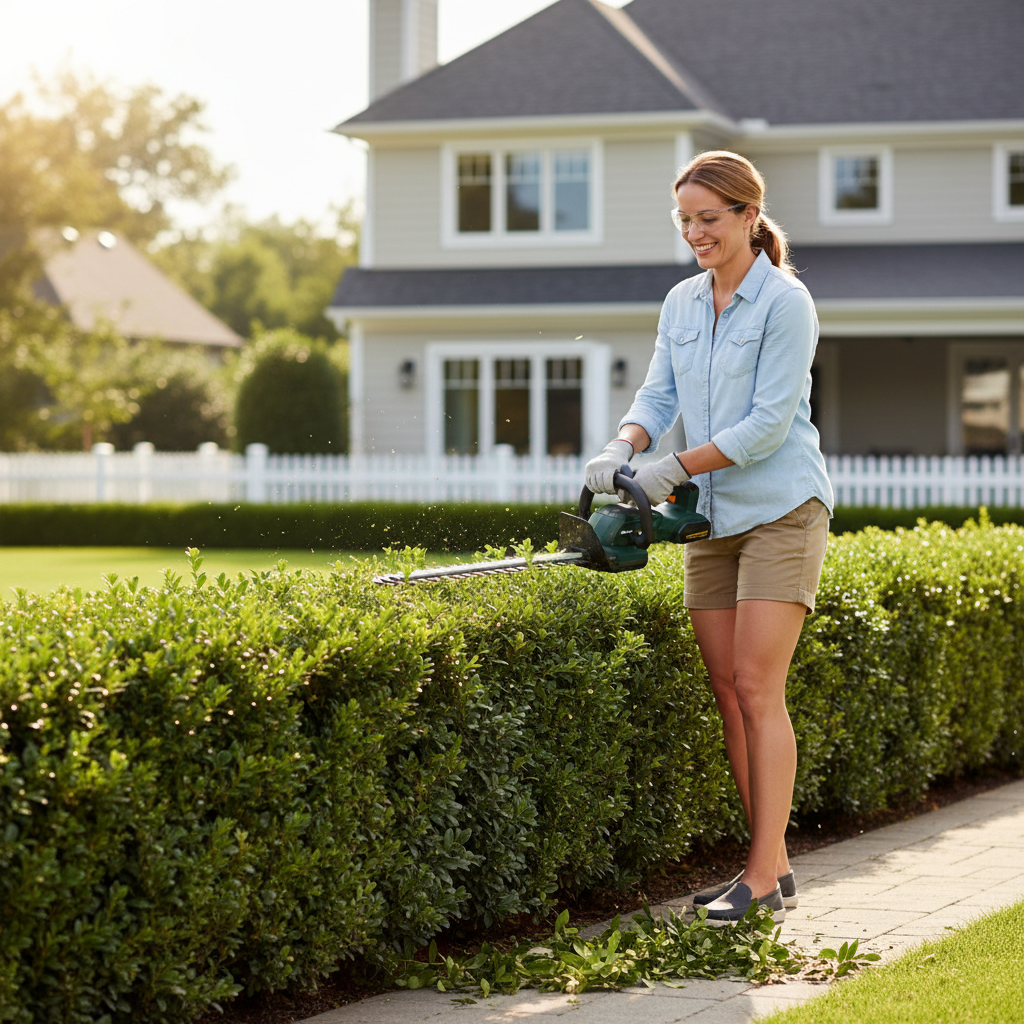
What “best” means for shrubs (not tall hedges)
Shrubs are typically closer to the ground, thicker in spots, and shaped more often than long hedgerows. That changes what “best” looks like: balance and control tend to beat maximum reach.
- Cut quality: Clean cuts help shrubs recover faster, dull blades tear and leave brown tips.
- Control: A lighter tool with good grip often produces straighter lines than a heavier “powerhouse.”
- Access: For rounded boxwoods or foundation plantings, you’ll angle the blade a lot, so swivel handles can matter more than raw power.
According to OSHA safety guidance on power tools, users should follow manufacturer instructions and maintain tools to reduce injury risk, that’s especially relevant with hedge trimmers where kickback and slipping happen fast.
Hedge trimmer types: which one fits your yard
Picking the type is 80% of the decision. Most returns and regrets come from buying the wrong category, then trying to “make it work.”
Cordless (battery) hedge trimmers
For most U.S. homeowners with shrubs around the house, cordless models are the default choice now, quiet enough for neighbors, no cord management, and plenty of power for routine trimming.
- Best for: regular shaping, small-to-medium shrubs, quick touch-ups
- Watch for: battery platform lock-in, weight with battery installed, runtime under load
Corded electric hedge trimmers
Corded tools still make sense if you have a smaller yard and an outlet nearby. They deliver consistent power without worrying about batteries aging.
- Best for: budget-focused buyers, light-to-medium shrubs near the house
- Watch for: cord drag, extension cord gauge, tripping hazards
Gas hedge trimmers
Gas shines when you’re cutting all day or dealing with thicker, older growth, but for typical shrubs it can be overkill, heavier, louder, and fussier to store.
- Best for: large properties, thick growth, long sessions
- Watch for: maintenance, cold starts, noise restrictions in some neighborhoods
Pole hedge trimmers (corded or cordless)
If your “shrubs” are really tall foundation plants you can’t reach comfortably, a pole trimmer is safer than balancing on a ladder. If you only need reach once a year, it may be worth renting or borrowing.
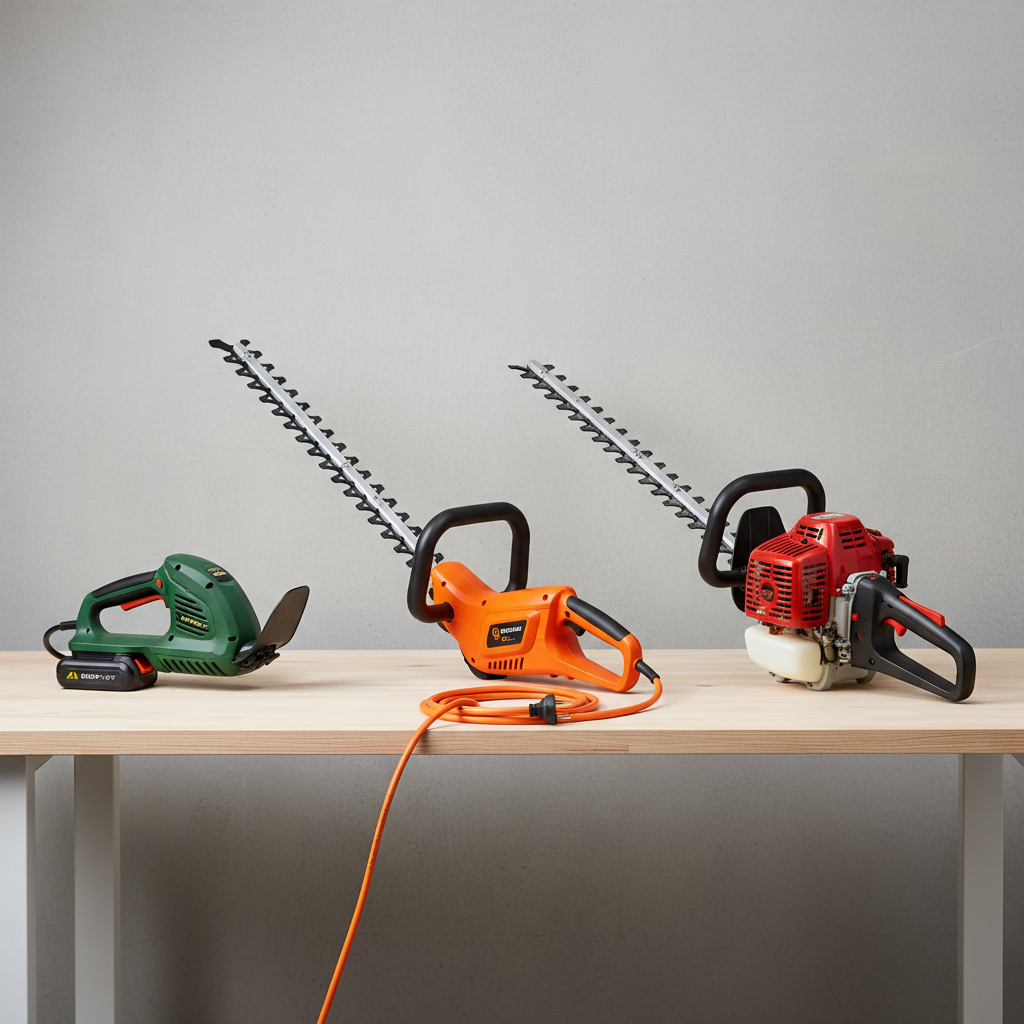
Key specs that actually matter (with a quick comparison table)
Spec sheets can feel like noise, but a few numbers do predict whether a trimmer will feel right for shrubs.
- Blade length: Around 18–22 inches tends to be easy to control for shrubs without feeling slow.
- Tooth gap (cut capacity): Wider gaps handle thicker stems, but can feel rougher on fine shaping.
- Weight and balance: Especially with cordless units, where the battery shifts the center of gravity.
- Vibration: Less vibration usually means you can trim longer with cleaner results.
Quick table: what to look for by shrub situation
| Shrub situation | Recommended type | Blade length | Cut capacity (tooth gap) | What to prioritize |
|---|---|---|---|---|
| Boxwoods, small ornamentals | Cordless or corded | 16–20 in | ~1/2 in | Light weight, clean cuts, swivel handle |
| Mixed shrubs, regular shaping | Cordless | 18–22 in | ~5/8 in | Balance, runtime, blade quality |
| Older shrubs with thicker stems | Gas or high-power cordless | 20–24 in | ~3/4 in | Power under load, anti-jam features |
| Tall shrubs you can’t reach safely | Pole trimmer | Short-to-medium head | Varies | Reach, head angles, shoulder comfort |
Fast self-check: which “best hedge trimmer for shrubs” bucket are you in?
If you answer these quickly, your choices narrow down on their own.
- How thick are the stems you cut most often? If many are near finger-width, you may need more cut capacity or a different pruning approach.
- How long do you trim in one session? Ten minutes favors light tools, 45 minutes makes vibration and ergonomics feel very real.
- Do you need reach? If you’re tempted to use a ladder, that’s a sign to consider a pole trimmer or hire out.
- Do you already own a battery platform? If you have other tools, matching batteries can save money, but don’t ignore ergonomics.
- What look are you chasing? Crisp straight lines benefit from longer blades, rounded shrubs often benefit from maneuverability.
Practical buying recommendations (by real scenarios)
Rather than naming a single winner for everyone, these are the setups that tend to work in typical U.S. yards.
Scenario A: You trim 5–15 shrubs a few times a year
Go cordless, mid-length blade, and prioritize balance. This is where the best hedge trimmer for shrubs often ends up being the one you actually enjoy using, because you’ll pick it up more often for small fixes.
- Look for: 18–22 in blade, comfortable rear handle, decent warranty support
- Avoid: extra-long blades that feel “pro,” but fight you on tight corners
Scenario B: You want the lowest upfront cost and trim near an outlet
A corded electric trimmer is still a strong value play. Use a proper outdoor-rated extension cord and keep the cord behind you, that one habit prevents a lot of frustration.
- Look for: lighter weight, strong trigger feel, easy blade maintenance access
- Avoid: underpowered models that stall on denser growth
Scenario C: Your shrubs are dense, older, and you fight jams
This is where people buy too small a tool and then blame the brand. Consider a higher-power cordless unit or gas, and be honest about what you’re cutting, hedge trimmers aren’t meant to replace loppers for thick woody branches.
- Look for: larger tooth gap, robust blade assembly, good anti-vibration design
- Also buy: a bypass lopper for stems that exceed your trimmer’s capacity
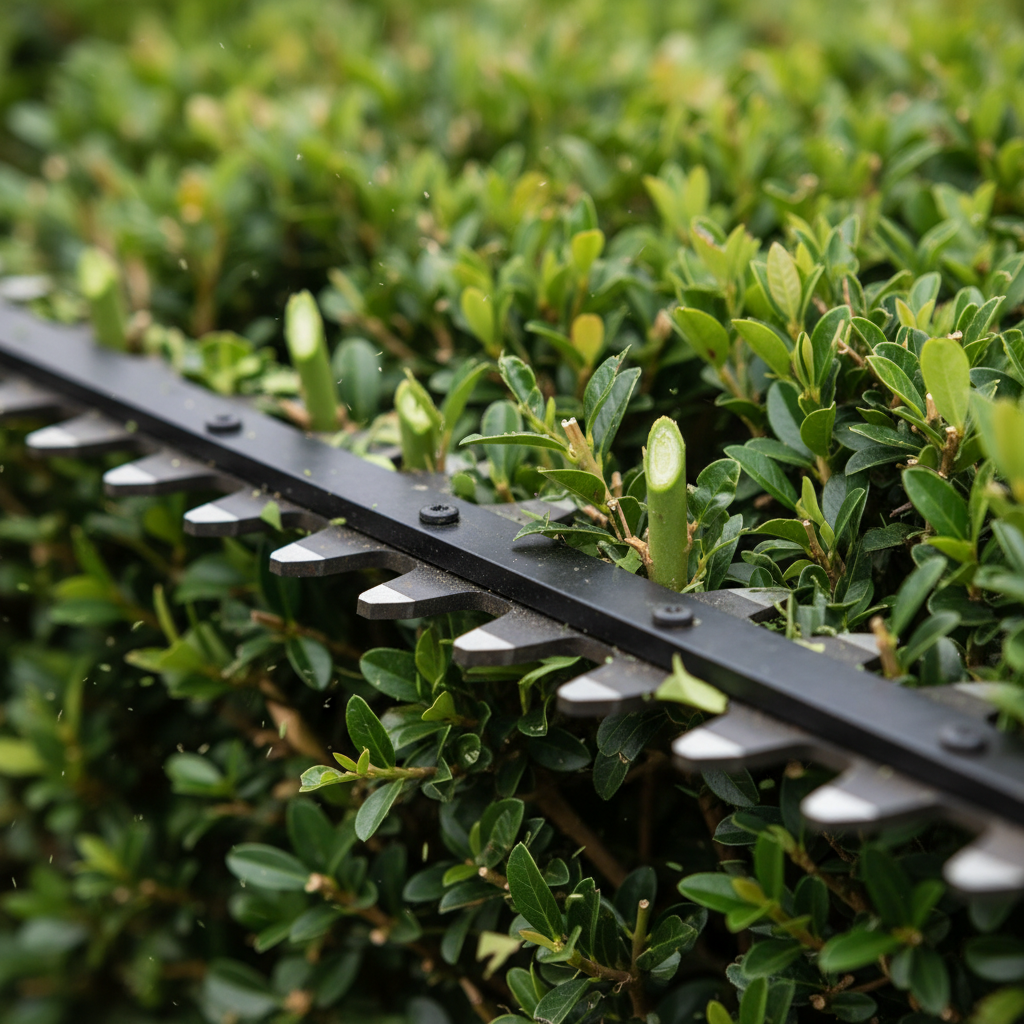
How to trim shrubs for cleaner lines (a simple, repeatable method)
Even the right tool can make shrubs look rough if the approach is random. A few small habits usually change the result immediately.
- Start with a quick “deadwood pass”: remove obvious thick branches with hand pruners or loppers before you power trim.
- Work top to bottom: clippings fall away instead of landing on finished surfaces.
- Take light passes: forcing deep bites increases tearing and jams, especially on dense shrubs.
- Use a guide for straight edges: a string line or even painter’s tape on stakes helps if you want crisp geometry.
For plant-timing specifics, local extension offices often provide region-specific guidance. According to USDA, plant care and pruning recommendations can vary by species and climate zone, when in doubt, check your shrub type before heavy cuts.
Safety and maintenance: the stuff that keeps your tool “best”
Hedge trimmers are deceptively simple, until a branch binds the blade or you’re working at an awkward angle. If you’re unsure about safe handling, it’s worth reading your manual end to end, boring, but practical.
Basic safety checklist
- Eye protection: small twigs can snap back unpredictably.
- Gloves with grip: helps with control, especially on vibration-heavy tools.
- Clear footing: avoid trimming while standing on loose mulch slopes.
- Power off before clearing jams: battery out, cord unplugged, or spark plug disconnected, depending on type.
Maintenance that affects cut quality
- Keep blades clean: sap buildup increases drag and heat.
- Light lubrication: many manuals recommend blade oiling, it reduces wear and makes cuts smoother.
- Sharpening: if you see tearing instead of slicing, sharpening or blade replacement is often the fix.
According to CPSC, consumers should use outdoor power equipment as directed and keep guards in place, if anything on the trimmer seems loose or damaged, stop and repair before the next session.
Common mistakes that waste money (and make shrubs look worse)
- Buying too much blade: long blades sound efficient, but they magnify wobble and fatigue for shrub shaping.
- Ignoring weight with the battery installed: the “display weight” isn’t the working weight.
- Trying to cut thick wood with a hedge trimmer: it leads to jams, torn cuts, and burned-out motors.
- Trimming whenever you feel like it: some shrubs respond poorly to heavy cutting at the wrong time, check species guidance.
- Letting blades go dull: people assume the motor is weak, when it’s really the edge.
When it makes sense to hire a pro (or ask for help)
If you’re dealing with tall shrubs near power lines, steep slopes, or anything that pushes you toward ladder work, hiring a professional can be the safer call. Also, if shrubs are diseased or dying back, aggressive trimming might make things worse, a local arborist or extension office can usually point you in a safer direction.
For gas equipment issues like fuel leaks or starting problems that repeat, a small-engine shop can be more cost-effective than swapping parts at random, and it reduces safety risk.
Conclusion: a “best” pick you’ll still like using in August
The best hedge trimmer for shrubs is the one that feels stable in your hands, matches your typical stem thickness, and fits your yard’s realities, outlets, reach, and how much time you actually spend shaping.
If you want a clean next step, do two things: measure the thickest stems you commonly cut, then hold a few trimmers in person if you can, weight and balance are hard to judge online.
Key takeaways
- Cordless fits most shrub-focused yards, prioritize balance and blade quality over max specs.
- Corded remains a smart budget choice when you’re near an outlet and can manage the cord safely.
- For thicker, woody growth, pair a stronger trimmer with loppers instead of forcing the blade.
FAQ
What blade length is best for trimming shrubs around a house?
For most foundation shrubs, an 18–22 inch blade is a comfortable middle ground, long enough to level surfaces, short enough to steer around corners and curves.
Is a battery hedge trimmer powerful enough for shrubs?
In many cases, yes, especially for routine shaping and green growth. Where cordless can struggle is older, woody stems near or beyond the rated cut capacity, that’s when loppers or a higher-power model helps.
How do I know if my hedge trimmer is tearing instead of cutting?
If you see frayed leaf edges, crushed stems, or browning tips shortly after trimming, the blade may be dull or gummed up with sap. Cleaning and light oiling can help, sharpening may be the real fix.
What’s the difference between tooth gap and blade length?
Blade length affects reach and how easily you create straight lines, tooth gap relates to how thick a branch the trimmer can handle. People often shop blade length first, but tooth gap matters more when jams happen.
Can I use a hedge trimmer to cut branches thicker than the rating?
It’s tempting, but it usually causes binding, rough cuts, and extra wear. For anything thicker than the tool’s cut capacity, a bypass lopper or pruning saw is the cleaner, safer option.
When should I choose a pole hedge trimmer for shrubs?
If you can’t reach the top without stretching or using a ladder, a pole trimmer is worth considering. It’s slower for tight shaping, but often safer for height work.
Do I need to sharpen hedge trimmer blades, or just replace them?
Many homeowner models can be sharpened, but replacement may be easier depending on design and part availability. If you’re not comfortable sharpening, a service shop can handle it and inspect for bent teeth.
If you want a simpler buying path
If you’re trying to choose the right shrub trimmer without spending hours comparing specs, it can help to shortlist by your shrub height and stem thickness first, then pick within your battery ecosystem or budget, a small filter process beats guessing and returning tools later.