
The best band saw for home workshop use in 2026 is the one that matches your space, your typical stock size, and how often you actually cut, not the one with the longest spec sheet.
If you have ever fought blade drift, burnt hardwood edges, or watched a “deal” saw vibrate across the bench, you already know why this purchase feels high-stakes. A bandsaw can be the quiet MVP of a small shop, but the wrong size or setup turns into constant tinkering.
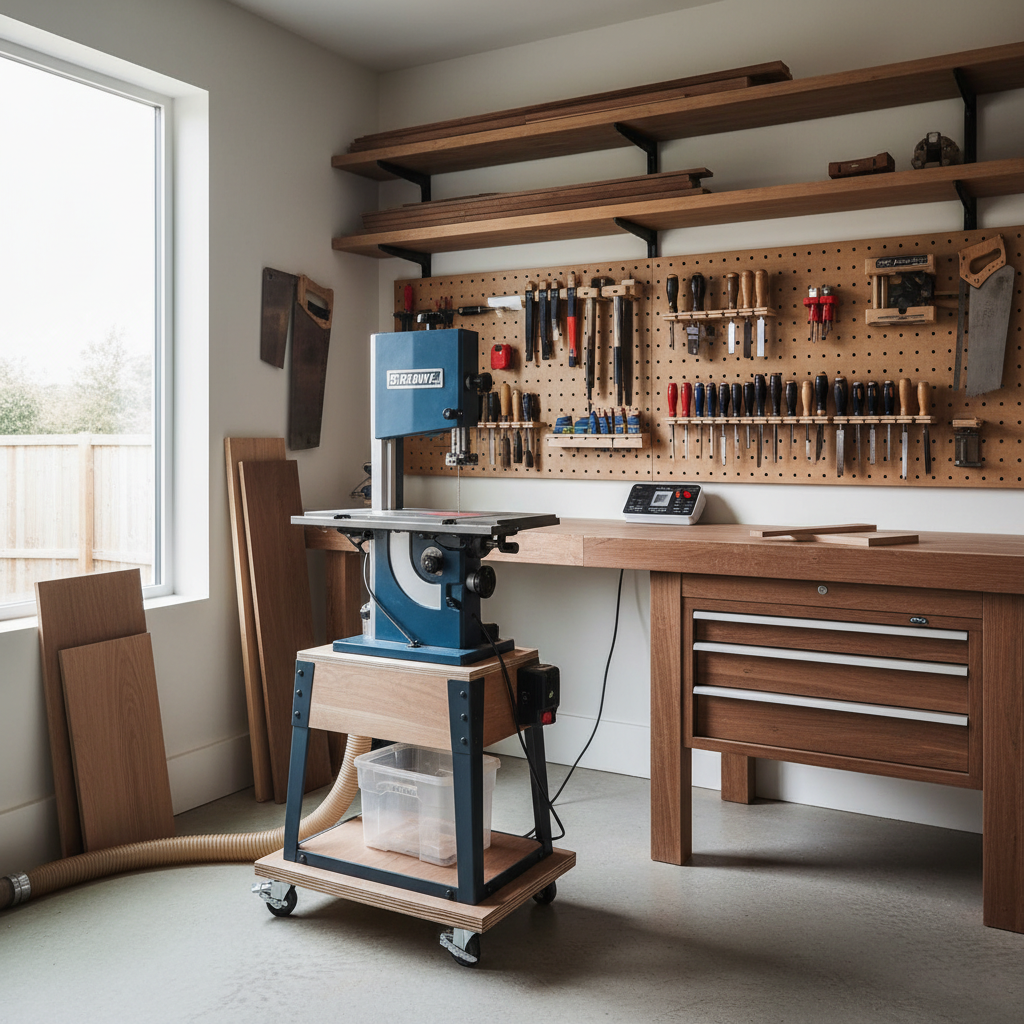
This guide stays practical: what matters most for home shops, how to choose between 9-inch, 10-inch, 14-inch, and 17-inch classes, what features are worth paying for, and what you can ignore. You will also get a quick checklist, a comparison table, and a short “buy once, cry once” reality check.
What “best” means for a home workshop (and what it usually does not)
In a home workshop, “best” typically means predictable cuts, manageable footprint, and low-maintenance setup. Most people are not resawing 12-inch walnut every weekend, they are cutting curves, breaking down small parts, trimming tenons, and occasionally resawing boards for bookmatched panels.
What tends to matter less than people expect is peak horsepower claims or exotic paint-and-badge branding. A bandsaw that tracks straight, holds adjustment, and accepts common blade sizes often beats a “stronger” saw with flimsy guides and mediocre wheels.
- Space reality: Floor space, ceiling height, and how you move material in a garage matter as much as throat capacity.
- Noise and dust: Home shops feel dust problems faster; dust ports and shrouding make a bigger difference than you think.
- Electrical limits: Many homes run 120V circuits; some larger saws want 240V for best performance.
Key specs that actually change your results
When readers ask for the best band saw for home workshop work, they usually want smoother curves, straighter rip-like cuts, and fewer mid-project adjustments. These specs connect directly to that.
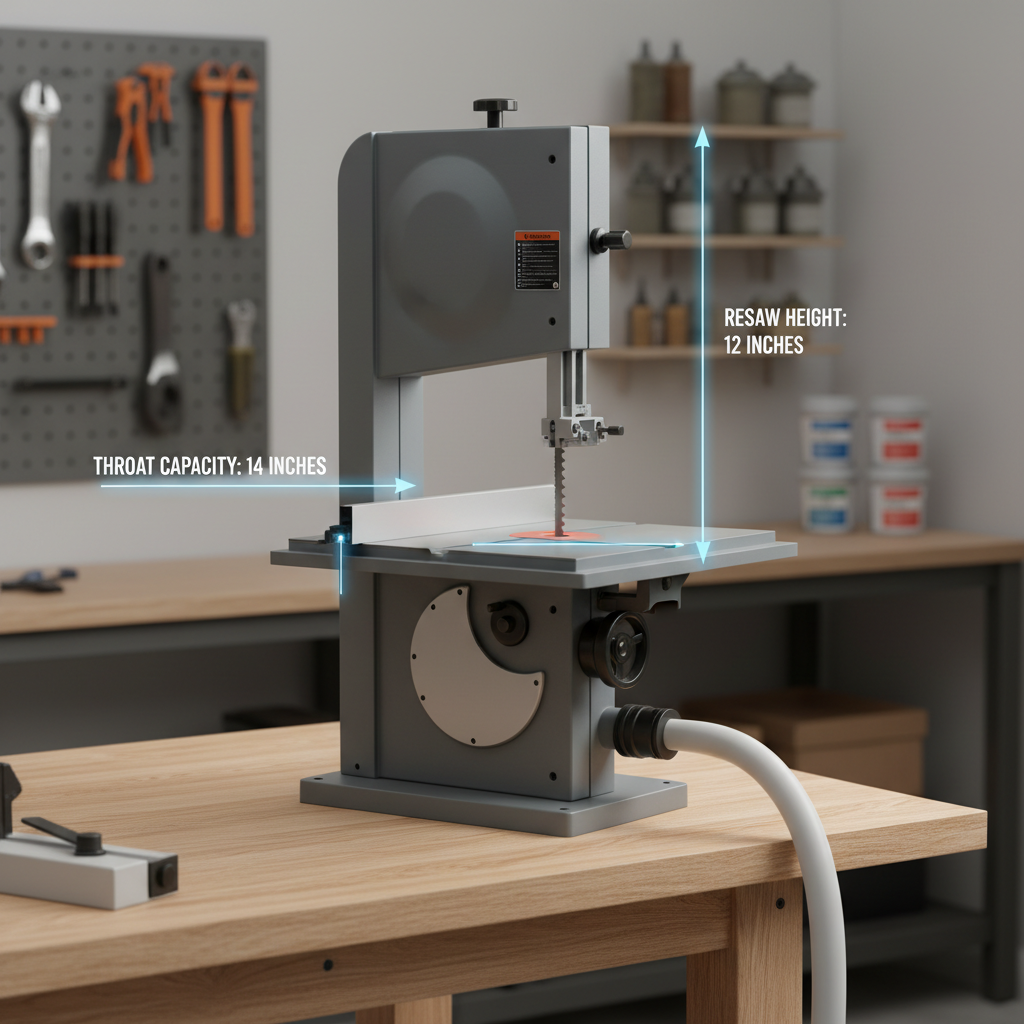
Throat capacity and resaw height
Throat (distance from blade to frame) limits curve work on wide panels. Resaw height is how tall a board you can slice into thinner slabs. If you only resaw occasionally, you can live with less height, but you cannot “upgrade” throat later.
- Benchtop 9–10 inch class: good for small parts and curves, limited resaw.
- 14 inch class: the common home-shop sweet spot, decent curve capacity, upgrade-friendly.
- 17–18 inch class: more stability and resaw potential, bigger footprint and budget.
Frame stiffness and vibration control
Stiff frames keep blade tension consistent, which helps tracking and reduces drift. Cast iron tables, decent wheel balance, and a solid stand are the boring details that separate “fine” from “pleasant to use.” If a saw chatters, your cut quality suffers and your patience disappears.
Blade width range and guide quality
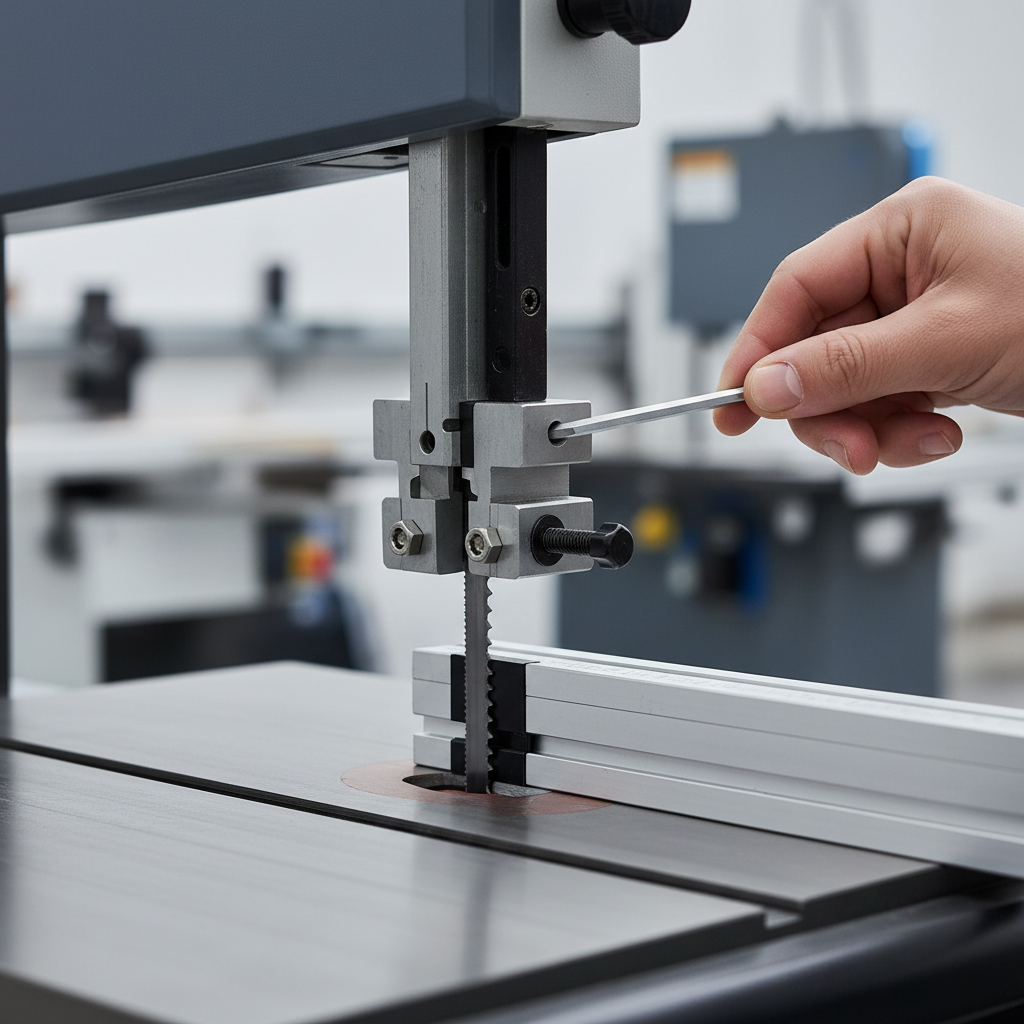
For tight curves you need narrower blades, for resaw you usually want wider blades that stay straight. The guides should support the blade without overheating it. Ceramic, bearing, and block guides can all work, but they must be easy to adjust and stay put.
According to OSHA, machine guarding and safe operation practices are essential to reduce injury risk when using shop equipment. Even if you are a hobbyist, treat guide adjustment and blade guarding as non-negotiable.
Dust collection design
A single 2.5-inch port can be “okay,” but many home shops do better with 4-inch ports and better internal airflow. Dust matters for cleanliness and visibility at the cut line, and fine dust can be a health concern, so wearing a respirator may help in many situations, especially with MDF or exotics.
Quick comparison table: which band saw class fits your shop?
If you are stuck between sizes, this table is the fastest way to narrow the field. Think of it as “what you will actually do” rather than “what you might do someday.”
| Band saw class | Typical best use at home | Main upside | Main tradeoff | Who it suits |
|---|---|---|---|---|
| 9–10 inch benchtop | Curves, small parts, light joinery | Compact, lower cost | Limited resaw, more vibration | Apartment/very tight garage shops |
| 14 inch floor (classic) | General woodworking, occasional resaw | Balanced size, broad blade options | May need upgrades for serious resaw | Most hobbyists and DIY builders |
| 14 inch “resaw-ready” | Frequent resaw, thicker hardwood | Better tension/frame, taller resaw | More expensive, heavier | Furniture makers on a budget |
| 17–18 inch floor | Regular resaw, wider panels, stability | Smoother cuts, higher capacity | Footprint, power needs, cost | Committed home shops, small pro work |
A simple self-checklist before you buy
This is the part most buyers skip, then regret. Answer these quickly and you will know what “best band saw for home workshop” means for you.
- Largest board you expect to resaw: 4 inches, 6 inches, 10+ inches?
- Most common cut type: curves, straight ripping, joinery cuts, green wood?
- How often you use it: weekly, monthly, a few times per year?
- Power available: 120V only, or 240V possible?
- Mobility need: must roll away after use, or can stay parked?
- Dust setup: shop vac, dust collector, or none right now?
If you answered “curves and small stock” and “few times per year,” a benchtop unit might be enough. If you answered “resaw” more than once, you are probably in 14-inch or 17-inch territory, even if your wallet argues.
Recommended buying approach for 2026 (without chasing hype)
Rather than naming one universal winner, here is a safer way to land on the best band saw for home workshop use: pick a size class, then filter by build quality and support.
Step 1: Choose the size class based on your most demanding task
- Mostly curves and small parts: 9–10 inch benchtop.
- General woodworking with occasional resaw: 14 inch floor saw.
- Resaw is a real workflow: “resaw-ready” 14 inch or 17–18 inch.
Step 2: Prioritize these features (they pay you back)
- Solid fence system with micro-adjust or drift compensation, especially if you resaw.
- Quick-release tension lever so you actually detension between sessions.
- Tool-less or low-fuss guide adjustment that you will not dread.
- Sturdy table and trunnions that do not flex when you push stock.
- Common blade length so you can buy quality blades easily.
Step 3: Budget for the “hidden” essentials
A bandsaw often performs like a different machine with the right blade and setup tools.
- Quality blades: a narrow blade for curves, a wider blade for resaw.
- Dust collection hose/adapters: plan this upfront.
- Mobile base: for garages where the car still wins.
- Setup aids: small square, feeler gauges, maybe a tension gauge if you get picky.
How to set up your band saw for straighter cuts (practical workflow)
Most “bad saw” complaints are really setup problems. A careful setup also helps any contender for the best band saw for home workshop work feel more controllable.
Blade selection: match the job, not your mood
- Curves: narrower blade, appropriate tooth count for your wood thickness.
- Resaw: wider blade, fewer teeth per inch, steady feed rate.
For many home woodworkers, having two blades you trust beats owning five blades you never install.
Tracking and tension: take your time once
- Set tracking with the saw unplugged, rotate wheels by hand.
- Bring tension up gradually, then fine-tune guide position.
- Do a test cut on scrap, adjust fence strategy if drift shows up.
According to CPSC, power tool injuries remain a consumer safety concern, and following manufacturer instructions, using guards, and wearing eye protection can reduce risk. If you are unsure about a procedure, it is reasonable to ask a more experienced woodworker or a qualified technician.
Feed rate and support: stop muscling the cut
If the cut wanders, many people push harder, then the blade deflects, then the cut gets worse. Use a steady feed rate, support long boards, and let the teeth do the work. For resaw, a tall fence or resaw point fence can help, depending on your technique.
Mistakes that waste money (and how to avoid them)
- Buying capacity you cannot use: A huge saw in a cramped garage turns material handling into a daily annoyance.
- Ignoring blade costs: The saw is the platform, blades are the performance.
- Chasing horsepower over stiffness: Frame rigidity often matters more for straight resawing.
- Assuming “factory setup” is enough: Even good saws benefit from a careful first tune.
- Skipping dust collection: Poor visibility at the cut line causes mistakes, and dust exposure can be a health risk.
One more quiet gotcha: if the brand has weak parts availability, a small break can sideline the tool for weeks. For most home shops, decent support beats fancy extras.
When it makes sense to get professional help
If your saw cannot hold tracking, throws blades, or the wheels look misaligned, you might be looking at a manufacturing defect or shipping damage. In those cases, it is often smarter to contact the manufacturer or a service tech instead of “fixing” it with random shims.
Safety-wise, if you are unsure about electrical requirements, wiring a 240V circuit, or diagnosing unusual vibration, a licensed electrician or qualified repair person is a safer route in many situations.
Conclusion: a realistic pick for most home shops in 2026
For many people, the best band saw for home workshop use in 2026 lands in the 14-inch floor saw category because it balances capacity, stability, and footprint without pushing you into major electrical or space upgrades. If resaw is central to your projects, stepping up to a resaw-ready 14-inch or a 17–18 inch saw usually feels worth it, but only if your shop can actually accommodate it.
If you want one actionable next step, measure your available footprint and write down your maximum resaw target, then shop inside that box. After that, spend a little extra on the right blade, it is the fastest way to make any saw cut like it should.