
how to use an adjustable wrench properly starts with one simple idea: the wrench should feel stable on the fastener, not like it could slip if you breathe on it.
Most people reach for an adjustable wrench because it’s convenient, but that convenience comes with tradeoffs, the jaws can flex, the fit can be slightly loose, and one wrong angle can round off a nut faster than you’d expect. If you’ve ever had a wrench “walk” off a bolt, you know the frustration.
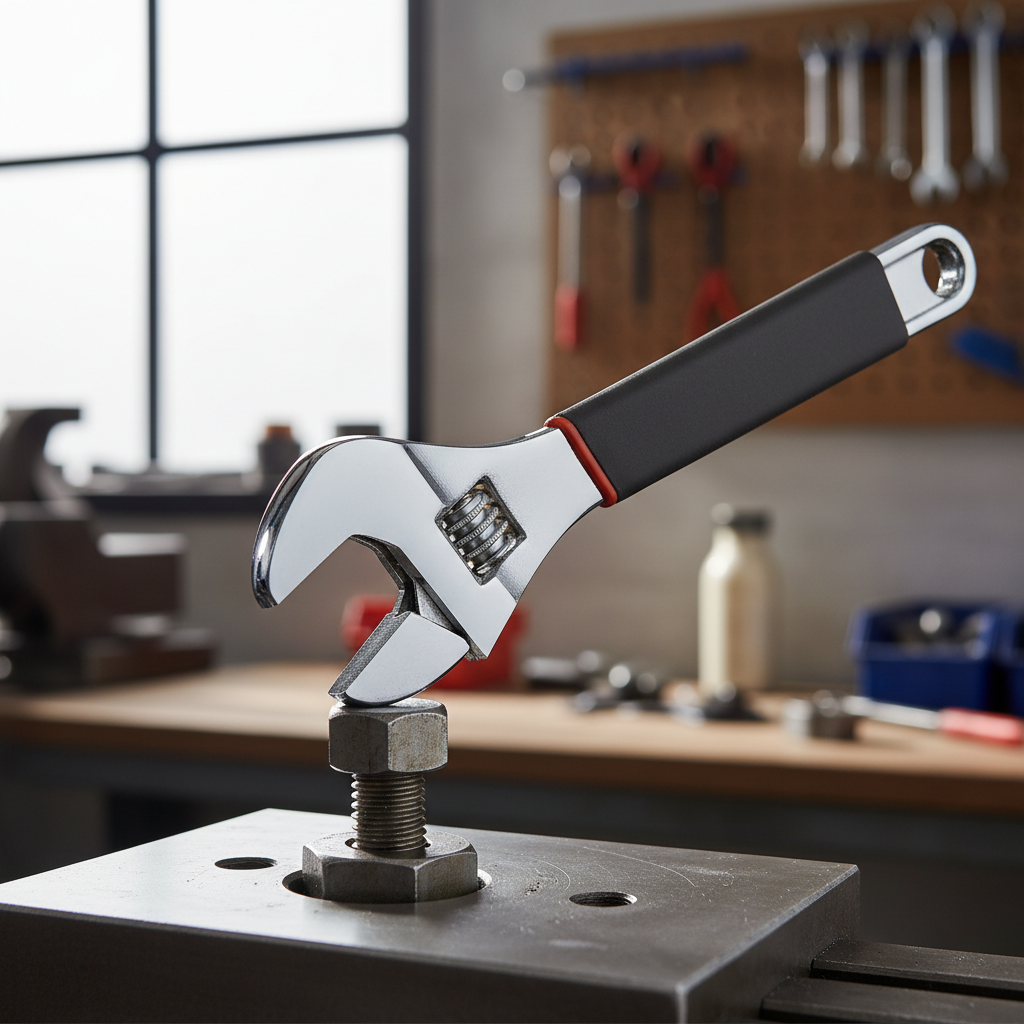
This guide focuses on the practical stuff that prevents damage, choosing the right size, setting the jaws tight, orienting the wrench so it tightens under load, and knowing when an adjustable wrench is the wrong tool. You’ll also get a quick checklist, a small reference table, and a few habits that make the tool feel more “locked in.”
What an Adjustable Wrench Does Well (and Where It Bites You)
An adjustable wrench is basically a variable-size open-end wrench, handy when you don’t have the exact size. The movable jaw rides on a worm screw, which is the part that makes it adjustable and also the part that introduces a bit of play.
- Good at: light to moderate torque, quick sizing changes, occasional DIY, plumbing fittings where you’re careful with surfaces.
- Not great at: stubborn fasteners, high-torque work, already-rounded nuts, tight clearances that demand a box-end wrench or socket.
According to OSHA, hand tools should be used only for their intended purpose and inspected for damage before use, because slips and tool failure are common causes of injury. That’s not dramatic, it’s just how most busted knuckles happen.
How to Set the Jaws So They Don’t Slip
The #1 mistake is leaving a tiny gap because “it’s close enough.” With an adjustable wrench, close enough often becomes rounded corners.
Dial in the fit
- Open the jaws a touch wider than the nut or bolt head.
- Place the wrench fully onto the flats (not the corners), then tighten the worm screw until the jaws feel snug with no wiggle.
- If you can rock the wrench on the fastener, it’s too loose, reset it.
Maximize contact
- Seat the wrench as deep as possible on the fastener, don’t hang off the edge.
- Keep the wrench square to the fastener, angled loads increase slip risk.
If the nut looks slightly rounded already, be honest about it, an adjustable wrench may make it worse. A 6-point socket or a dedicated fastener extractor is often safer.
Correct Jaw Direction: The Detail That Saves Fasteners
People hear “fixed jaw takes the load” and shrug, but this is where most “why did it slip?” stories come from. The wrench has a fixed jaw (part of the body) and a movable jaw (adjusted by the screw). Under force, the movable jaw can spread slightly if it’s loaded the wrong way.
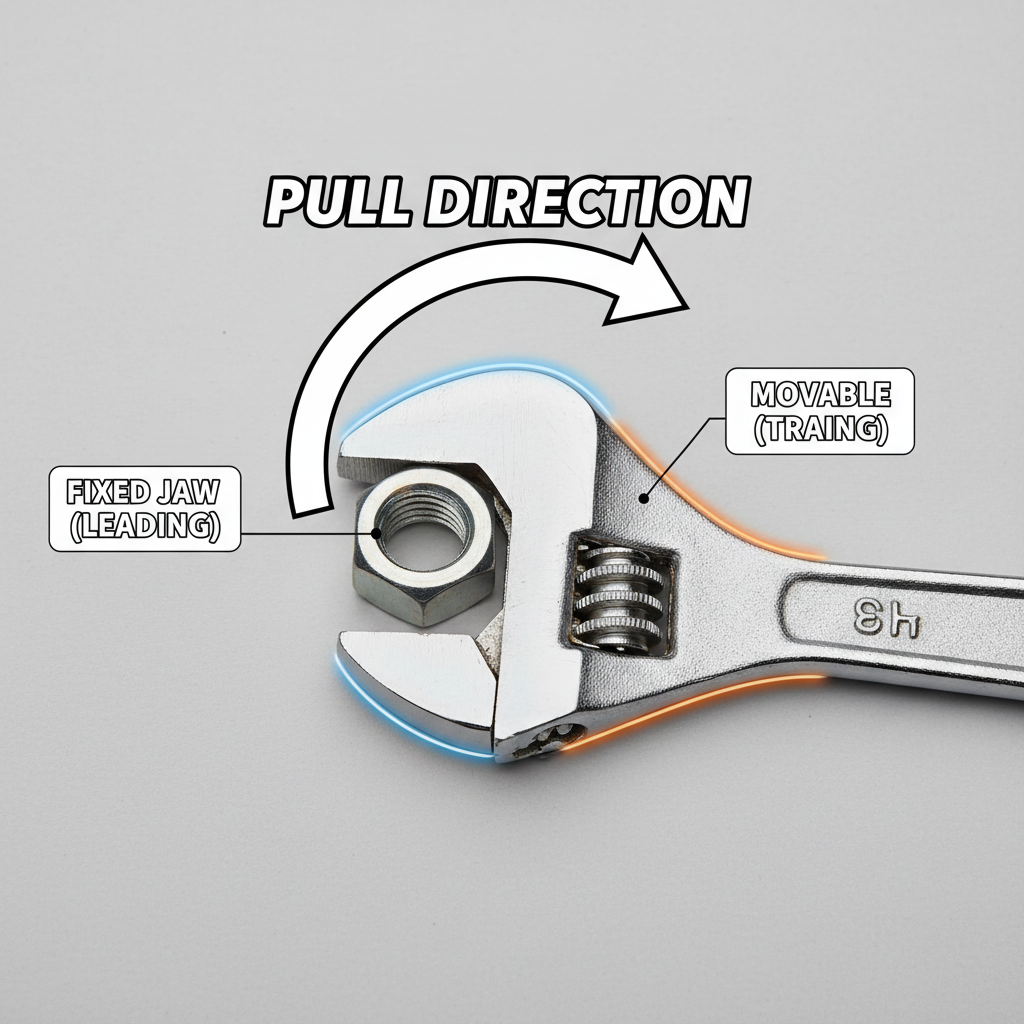
Rule of thumb: set it so your turning force pushes against the fixed jaw, not the movable jaw. In practice, that means when you pull, the fixed jaw should be on the side that “leads” the rotation.
- When loosening (typical right-hand thread): orient the wrench so the fixed jaw is the one that takes the main push/pull.
- When tightening: same idea, flip the wrench so force loads the fixed jaw.
If you’re unsure, lightly apply force and watch the jaws, if the movable jaw tries to open, you’re oriented the wrong way.
Grip and Body Position: More Control, Less Drama
Even with the jaws perfect, a sketchy grip can twist the wrench off the flats. You want steady pressure, not a sudden jerk.
- Pull, don’t push when possible, pulling gives better control and reduces the chance your hand shoots forward if it slips.
- Keep your wrist straight and your forearm roughly in line with the handle.
- Use the end of the handle for leverage, but don’t add cheater bars unless the wrench is designed for that level of torque.
- If you need more torque, consider switching tools rather than improvising.
According to CDC guidance on workplace safety and injury prevention, using tools in ways that reduce sudden slips helps avoid common hand and wrist injuries. That’s one reason “pull, don’t push” shows up in so many shop habits.
Quick Self-Check: Are You Using the Right Tool for This Job?
Before you commit, run this short checklist. It saves time, because recovering from a rounded nut always takes longer than grabbing a different wrench.
- Is the fastener hex-shaped with clean, sharp flats (not already rounded)?
- Can you seat the wrench fully without obstruction?
- Do you expect light to moderate torque, not “breaker bar” force?
- Can you orient the wrench so the fixed jaw takes the load?
- Is the workpiece stable so you’re not fighting movement?
If you answered “no” to two or more, this is usually the moment to grab a box-end wrench, a socket, or locking pliers, depending on the situation.
Common Fastener Sizes and Wrench Capacity (Reference Table)
Adjustable wrenches are typically labeled by overall length, but what matters is jaw capacity. The numbers below are common ranges, not universal, because brands vary.
| Wrench Length | Typical Jaw Capacity | Best Use (Realistic) |
|---|---|---|
| 6 in | Up to ~3/4 in | Light duty, small fittings, tight spaces |
| 8 in | Up to ~1 in | General household use, furniture, bikes |
| 10 in | Up to ~1-1/4 in | Heavier DIY, some automotive tasks |
| 12 in | Up to ~1-1/2 in | Plumbing unions, larger nuts with caution |
Picking a wrench that’s too large for a small fastener often reduces control, while a wrench at the edge of its capacity is more likely to flex. When in doubt, choose the smallest wrench that comfortably fits.
Practical Step-by-Step: Loosening and Tightening Without Rounding
If you want a repeatable method, this is it. It’s not fancy, it’s just consistent.
To loosen a nut or bolt
- Brush off grit and rust so the jaws seat on clean flats.
- Set the jaw tight, then verify the fixed jaw will take the load in your pull direction.
- Apply force smoothly, if it doesn’t budge, stop and reassess instead of escalating with sudden jerks.
- If it’s stuck, consider penetrating oil, a proper box-end wrench, or a socket before forcing the adjustable.
To tighten
- Snug the jaws again, don’t assume the previous setting stayed perfect.
- Turn until snug, then stop once resistance ramps up, many assemblies have torque specs for a reason.
- If you’re working on plumbing compression fittings or soft metals, overtightening can damage threads or crush parts.
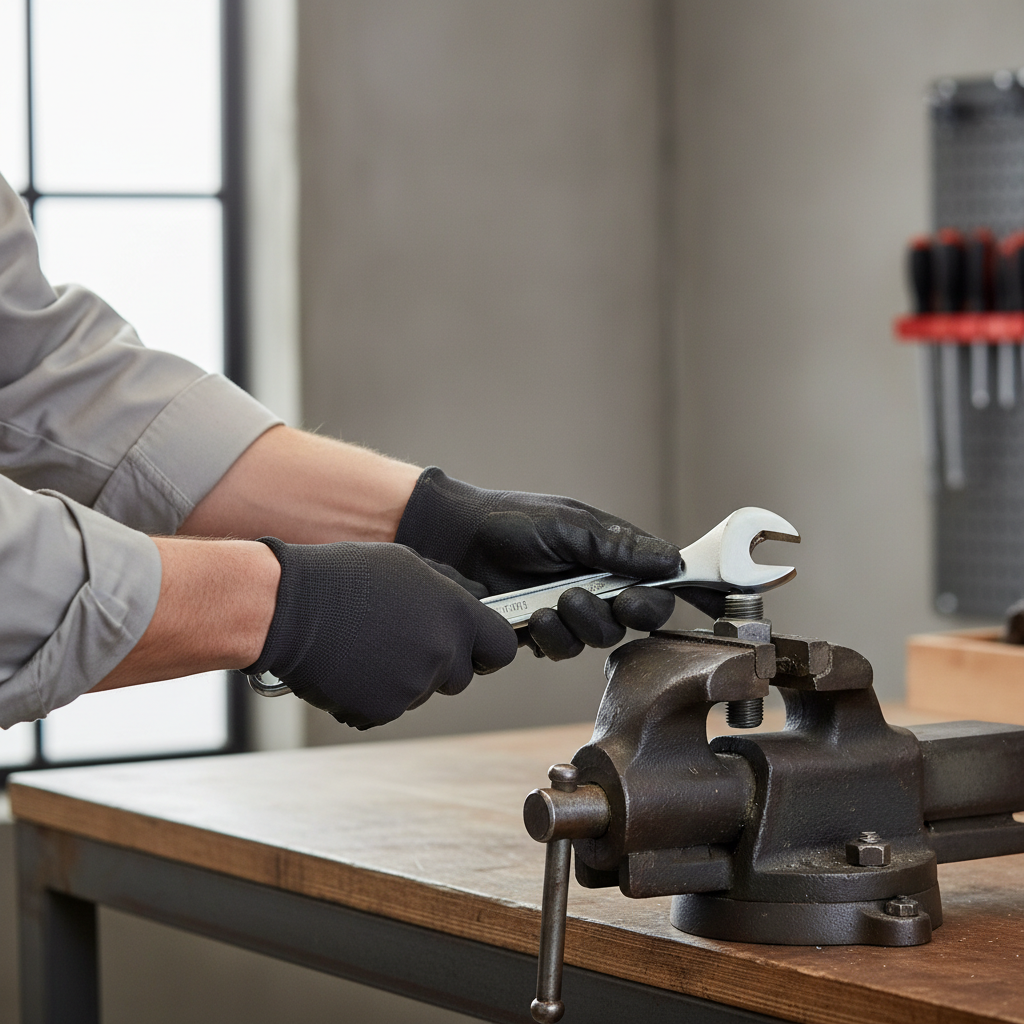
If you keep asking “why is it slipping even though it’s tight?”, the answer is often jaw direction, worn jaws, or a fastener that needs a different tool. That’s normal, not user failure.
Mistakes to Avoid (These Are the Usual Culprits)
- Using it like pliers, squeezing the handle sideways instead of letting the jaws do the work.
- Working on corners instead of flats, corners round fast.
- Letting the wrench sit crooked, even a small angle increases spreading force.
- Using a cheater pipe on a standard adjustable wrench, high torque can cause jaw spread or tool failure.
- Ignoring wear, if the jaws look polished, chipped, or visibly tapered, it may never grip well again.
Also, don’t be tempted to hammer the handle to shock a fastener loose. In many cases that damages the wrench mechanism, and it can send your hand somewhere you didn’t plan.
When to Get Help or Switch Tools
If you’re dealing with gas lines, critical plumbing, automotive suspension components, or anything where failure could cause injury or a leak, it’s usually smarter to switch tools or consult a qualified professional. The cost of a mistake often exceeds the cost of doing it right.
- If a fastener is seized and you’re escalating force, a socket and breaker bar is often the safer next step.
- If the nut is already rounded, a dedicated extractor or locking pliers may work better than an adjustable wrench.
- If you see cracks, bending, or jaw wobble in the wrench, replace it rather than “making it work.”
Key Takeaways and Next Steps
how to use an adjustable wrench properly comes down to fit, jaw direction, and controlled force, get those right and you’ll avoid most slips and rounded hardware. Use the smallest wrench that fits, load the fixed jaw, and stop early when torque starts turning into tool abuse.
If you do one thing today, make it this: set the jaws snug, then check orientation before you pull. That two-second pause saves a lot of hardware.