
Band clamp tool for hose searches usually come from the same annoying moment: you tighten a clamp, it looks fine, then the hose seeps, twists, or the band won’t sit flat. The good news is most of that frustration comes from clamp type mismatch or using the wrong tool for the style of band, not from “bad hands.”
If you pick the right tool and set it up correctly, you get a clamp that sits square, holds tension, and doesn’t chew up the band. That matters on anything from coolant lines and CV boots to plumbing and industrial hose, because rework is where time and money disappear.
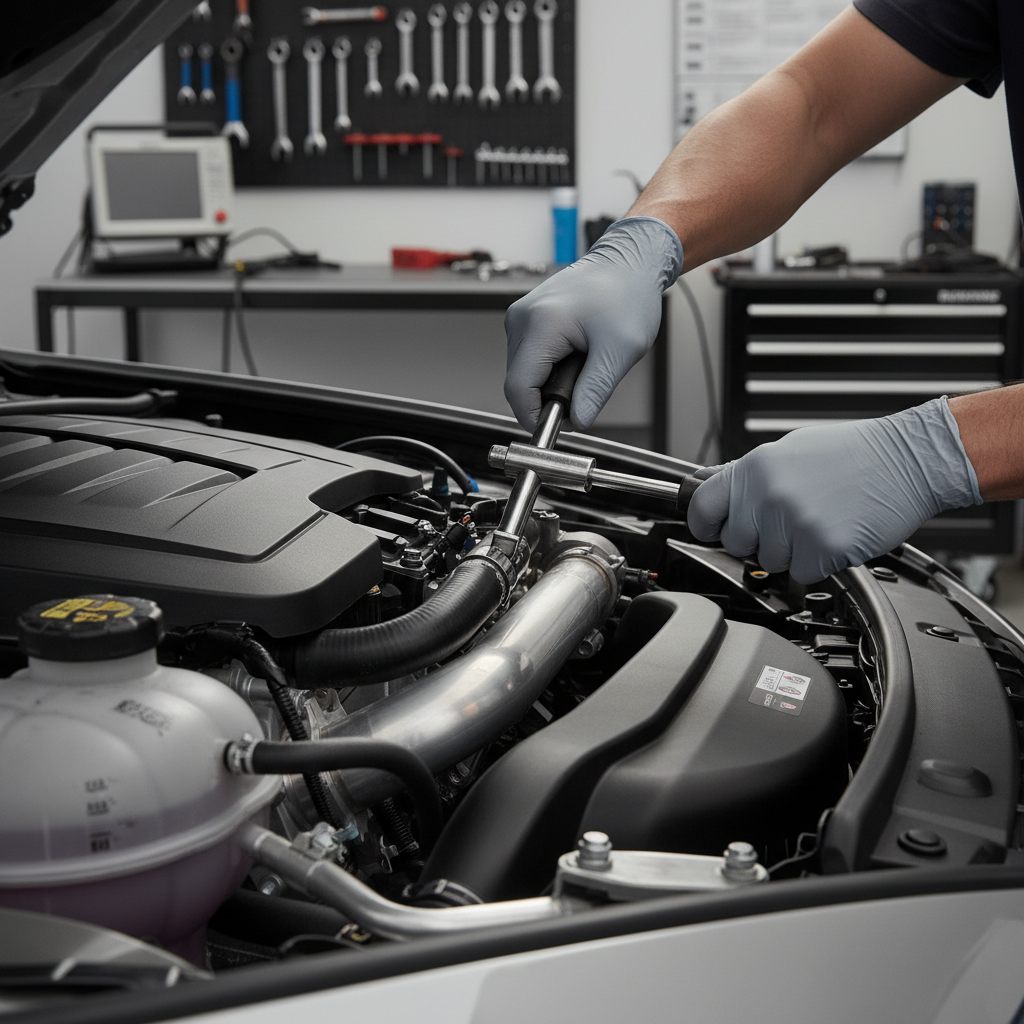
This guide breaks down why clamps fail, how to tell which clamp you actually have, and how to use a banding tool without over-tightening. I’ll also call out the common “looks right but isn’t” mistakes that cause leaks later.
Why hose band clamps fail (and it’s not always the clamp)
Most clamp issues fall into a few real-world patterns, and the fix depends on which pattern you’re in.
- Wrong clamp style for the job: A worm-drive clamp can work on many hoses, but it can also create uneven pressure on softer hoses. Ear clamps and band clamps distribute load differently.
- Band misalignment: If the band sits on a barb edge, ridge, or flare, tension concentrates in one spot and the seal can weep.
- Under- or over-tension: Too loose leaks now, too tight can cut into the hose or deform fittings. With band clamps, over-tension often shows up as a “wavy” band or damaged buckle area.
- Hose surface issues: Oil film, old coolant crust, or a hardened hose outer layer prevents good sealing even with a perfect clamp.
- Thermal cycling and vibration: Heat cycles and vibration can relax some materials or shift the hose, especially if the clamp is positioned too close to the end.
According to OSHA, using the correct tools and maintaining them is a core part of reducing workplace injury risk during mechanical work, especially where pinch points and hand tools are involved. That’s relevant here because clamp tools can slip if the tool/clamp pairing is off.
Quick self-check: what clamp do you have, and what tool does it need?
Before you buy anything, identify the clamp in front of you. A lot of “band clamp tool for hose” confusion is really “I have an ear clamp but bought a banding tool,” or the other way around.
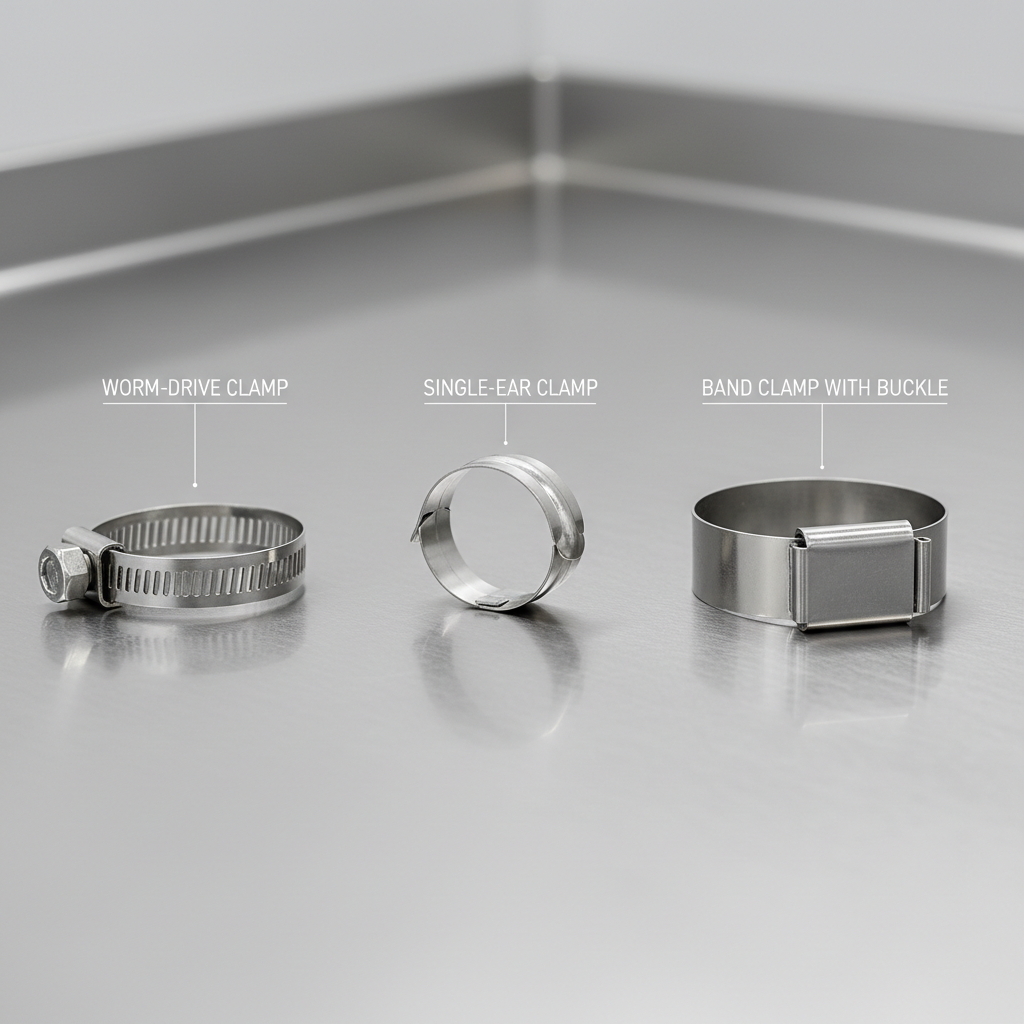
Use this as a fast ID guide:
- Worm-drive clamp: Has a screw housing you tighten with a screwdriver or nut driver. Tool need: driver/socket, not a banding tool.
- Ear clamp (Oetiker-style): Has one or two “ears” you pinch closed. Tool need: ear clamp pincers/cutters designed for crimping.
- Band clamp with buckle: Smooth band wraps around, feeds through a buckle, then gets tensioned and locked. Tool need: a band clamp tensioning tool (banding tool).
- Spring clamp: Squeezed open with pliers, relies on spring force. Tool need: clamp pliers.
If you truly have a buckle-style band clamp, a banding tool is the right direction, but you still need to match tool features to your working space and band material.
Choosing a band clamp tool for hose: what matters in practice
There are lots of listings that look similar. The differences that matter show up when you’re leaning into a tight space and trying not to kink a hose.
Key features to look for
- Compatible band width range: Many tools only handle a narrow range. Check the clamp’s band width before ordering.
- Cutting mechanism quality: Some tools tension well but leave ragged cut edges. A cleaner cut reduces sharp tails and future snag points.
- Tension control: A predictable ratchet or screw-tension feel helps you avoid over-tension. No tool can “know” the correct tension for every hose, but better control helps.
- Access and ergonomics: Offset handles or compact heads matter in engine bays and under sinks. If you can’t hold the tool square, alignment suffers.
- Band tail handling: Good tools keep the tail guided so it doesn’t twist while tensioning.
Clamp material and environment
Stainless clamps behave differently than mild steel, and wet or corrosive environments punish cheap hardware. If this is marine, outdoor, or chemical exposure, stainless is usually considered, but the exact grade and compatibility can vary by application.
According to SAE International, hose clamp performance and selection are tied to application requirements such as temperature range, corrosion environment, and retention needs, so “one clamp fits all” rarely holds up when conditions change.
A practical comparison table (tool types and best-fit jobs)
If you’re deciding between a banding tool and other clamp tools, here’s a quick reality check.
| Clamp / Tool Type | Typical Use | Main Upside | Common Downside |
|---|---|---|---|
| Band clamp + band clamp tool | CV boots, heavy-duty hose, specialty installations | Smooth band, strong retention, clean look | Needs correct tool and technique, can be over-tensioned |
| Worm-drive + driver/socket | General automotive, plumbing, shop repairs | Easy to find, easy to adjust | Can create uneven pressure, housing can snag |
| Ear clamp + crimp pliers | Fuel/vacuum lines, OEM-style applications | Even compression, compact profile | One-time use, needs correct ear size and crimp tool |
| Spring clamp + pliers | Cooling system hoses on many vehicles | Handles thermal cycling well | Can be awkward in tight spaces, limited adjustability |
How to use a band clamp tool for hose without fighting it
The process is straightforward, but the “easy” parts are where people slip. Focus on alignment and controlled tension.
Step-by-step install (general method)
- Prep the hose and fitting: Wipe off oil/grease, remove crust, and check the hose end for cracking. If the hose feels stiff or glazed, sealing can be inconsistent.
- Position the clamp correctly: Usually you want the band behind the barb, not on the very edge of the hose. If you’re unsure, check the equipment manual.
- Feed the band through the buckle: Keep the band flat. If it twists now, it rarely “untwists” under tension.
- Seat the tool square: If the tool pulls at an angle, the buckle can cant and the band can crease.
- Tension gradually: Go in small increments, pause, and look around the circumference for shifting. The goal is uniform compression, not maximum force.
- Lock and cut cleanly: Once secure, lock per clamp design and cut the tail using the tool’s cutter or an appropriate method that avoids sharp edges.
- Inspect and recheck: After the system runs and cools, a second inspection often catches small settling movement.
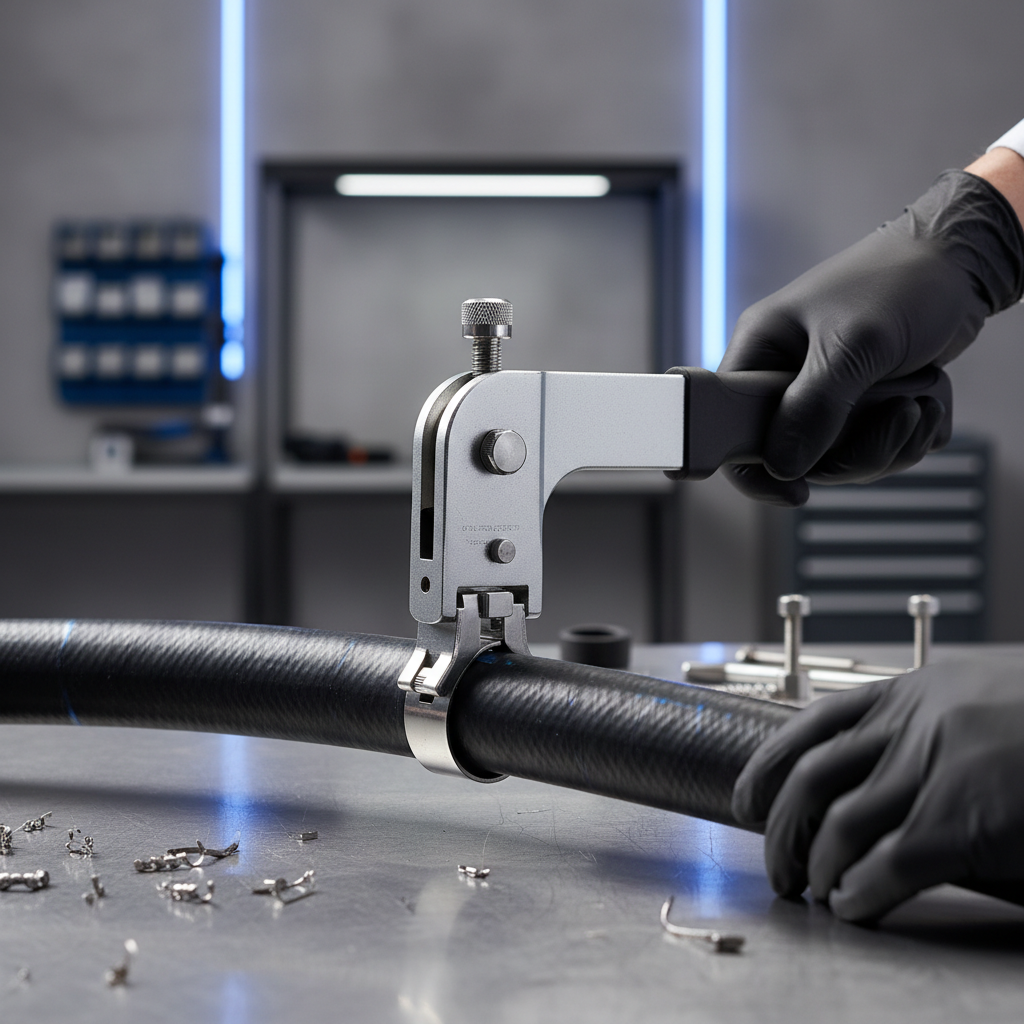
Key point: if you see the band “walking” sideways as you tension, stop and reset. Continuing usually locks in misalignment and you end up chasing a leak with more torque, which makes things worse.
Common mistakes that waste time (and how to avoid them)
- Using the tool like a winch: More tension is not the same as better sealing. If the hose starts to deform, you’re past the useful range.
- Clamping over a damaged hose end: If the last half inch is cracked or ovaled, moving the clamp slightly back can help, but often the hose needs replacement.
- Ignoring band tail hazards: Fresh-cut stainless tails can be sharp. Deburr if needed and orient the tail away from hands or nearby wiring.
- Skipping a post-run check: Heat and pressure can settle the assembly. A quick recheck saves comebacks.
- Wrong band width in the tool: If the tool doesn’t guide the width well, tensioning becomes uneven and the cut can tear.
For safety, wear eye protection and gloves when cutting band material. If the installation is pressurized, hot, or chemical-exposed, it’s smart to follow the equipment service guidance and consult a qualified technician when you’re uncertain.
When it makes sense to get professional help (or change approach)
Sometimes the “right tool” isn’t enough because the problem isn’t the clamp.
- Repeated leaks after proper clamping: Could be a warped fitting, wrong hose ID, or surface damage. A professional can verify mating surfaces and specs.
- Critical systems: Fuel lines, high-temp coolant circuits, or industrial chemical transfer deserve extra caution. Small mistakes can become expensive or dangerous.
- Limited access: If you can’t keep the tool square, you may need a different clamp style, a different tool head, or disassembly for access.
If the application is regulated or warranty-sensitive, follow OEM or manufacturer procedures. That’s the boring answer, but it avoids avoidable headaches.
Conclusion: a cleaner clamp comes from match + method
A band clamp tool for hose pays off when you pair it with the correct buckle-style clamp, keep the band flat, and tension in a controlled way. If you’re still seeing seepage, step back and check hose condition and clamp placement before you muscle it tighter.
If you want one next action, do this: identify your clamp style, then confirm band width and access needs before buying a tool. That small upfront step prevents most “wrong tool” returns and most messy rework.
FAQ
What is a band clamp tool for hose used for?
It tensions and often cuts buckle-style band clamps so the band wraps evenly around a hose or boot. It’s not the same tool used for worm-drive or ear clamps.
Can I use a banding tool on an Oetiker ear clamp?
Usually no. Ear clamps need crimping force at the ear, while banding tools pull and lock a band through a buckle. Mixing them tends to damage the clamp or leave it under-secured.
How tight should a band clamp be on a hose?
Tight enough to seal uniformly without visibly cutting into the hose or distorting the fitting. The “correct” tension varies by hose material and application, so increase gradually and inspect as you go.
Why does my band clamp keep slipping while I tension it?
Most often the band is twisted, the tool is pulling at an angle, or the band width doesn’t sit properly in the tool’s guide. Resetting the band flat and squaring the tool usually fixes it.
Do stainless band clamps require a different tool?
Many tools handle stainless, but cheaper cutters can struggle and leave sharp, jagged tails. If you work with stainless often, prioritize a tool known for clean cutting and solid tension control.
Is a worm-drive clamp “worse” than a band clamp?
Not always. Worm-drive clamps are convenient and adjustable, but band clamps can provide a smoother profile and strong retention in certain jobs. The better choice depends on space, hose softness, and service needs.
Can a band clamp tool fix a leak if the hose is old?
Sometimes repositioning helps, but if the hose end is hardened, cracked, or swollen, a stronger clamp can’t reliably restore the sealing surface. Replacing the hose is often the more stable fix.
What should I check after installing a band clamp?
Look for even band contact around the full circumference, no sharp tail hazards, and no hose bulging at the edges. After a heat cycle or a short run, recheck for settling and seepage.