
Best safety glasses for power tools come down to three things you can feel immediately: coverage that actually blocks chips, lenses you can keep clear, and a fit that won’t loosen the moment you sweat or look down.
If you’ve ever finished a cut and found fine dust on your eyelashes, or you keep pushing your glasses back up with a dirty glove, you already know why “any safety glasses” isn’t the same as “the right pair.” Power tools create fast, unpredictable debris, plus airflow that dries eyes and makes lenses fog at the worst time.
This guide helps you choose by task, not hype, with a simple checklist, a comparison table, and practical pick recommendations for common shop and jobsite scenarios. I’ll also call out a few mistakes that waste money, like overbuying coatings you don’t need while ignoring side coverage.
What matters most when choosing safety glasses for power tools
Start with impact rating and coverage, then work outward toward comfort features. According to ANSI, eyewear marked ANSI/ISEA Z87.1 is tested to specific impact requirements, which is the baseline most people should look for when using power tools.

After that, the “best” choice usually depends on what your tool throws at your face and how long you wear the glasses.
- Impact rating (non-negotiable): Look for Z87.1 marking on frame or lens. If you need prescription, confirm the Rx model is also Z87.1 compliant.
- Wrap and side protection: A mild wrap helps block side entry. For grinders and routers, more wrap often equals less grit in your eyes.
- Lens material: Polycarbonate is common because it’s impact-resistant and light. It scratches easier than glass, so coatings matter.
- Anti-fog and venting: Fog is often a fit/airflow problem, not a willpower problem. Coatings plus good airflow beat either one alone.
- Comfort and stability: Soft nose pads, flexible temples, and a secure bridge keep you from adjusting constantly.
- Compatibility: Ear protection, respirators, and face shields can all push frames out of position. Test the full stack.
Key point: If you do anything that creates fine dust clouds (sanding, cutting MDF, drywall), comfort and anti-fog are not “nice-to-have.” They’re the difference between keeping glasses on and taking them off “for a second.”
Quick comparison table: match glasses style to your tool work
Use this as a fast filter. You can still pick brands you like, but the category fit matters more than the logo.
| Work type | Typical hazards | Best style | Lens tint suggestion | Notes |
|---|---|---|---|---|
| Drilling, driving, general shop | Small chips, dust | Wraparound safety glasses | Clear (indoors) | Prioritize comfort + side coverage |
| Miter saw, circular saw | Wood chips, sawdust | Wraparound or lightweight goggles | Clear / light amber | If dust swirls behind lenses, move up to a gasketed frame |
| Grinding, cutting metal, wire wheel | High-speed particles, sparks | Sealed or foam-gasket safety glasses, often under a face shield | Clear | Don’t rely on open-sided frames for heavy grinding |
| Sanding, drywall, MDF cutting | Fine dust, irritation | Indirect-vent safety goggles | Clear | Anti-fog becomes critical, consider respirator fit |
| Outdoor cutting (decking, masonry) | Bright sun + debris | Wraparound safety glasses | Gray / polarized (if allowed) | Polarized can affect visibility of some screens/lasers |
How to tell what you need in 60 seconds (self-check)
This is the part most buyers skip, then they end up with foggy lenses or gaps. Answer honestly.
- Do you ever feel air hit your eyes from the side? If yes, you likely need more wrap or a foam gasket.
- Do your lenses fog within 5–10 minutes? You likely need a better anti-fog coating, improved venting, or a different nose/bridge fit.
- Do you wear a respirator or dust mask often? Choose frames that seal well around the bridge without lifting the mask, or go goggles.
- Do you wear earmuffs? Thick temples can break the seal on hearing protection and also create pressure points.
- Are you mostly indoors under shop lighting? Clear lenses are simplest. Photochromic can be convenient but not always fast enough for frequent in/out.
- Do you do grinding or wire brushing? Plan for goggles or gasketed glasses, and consider pairing with a face shield.
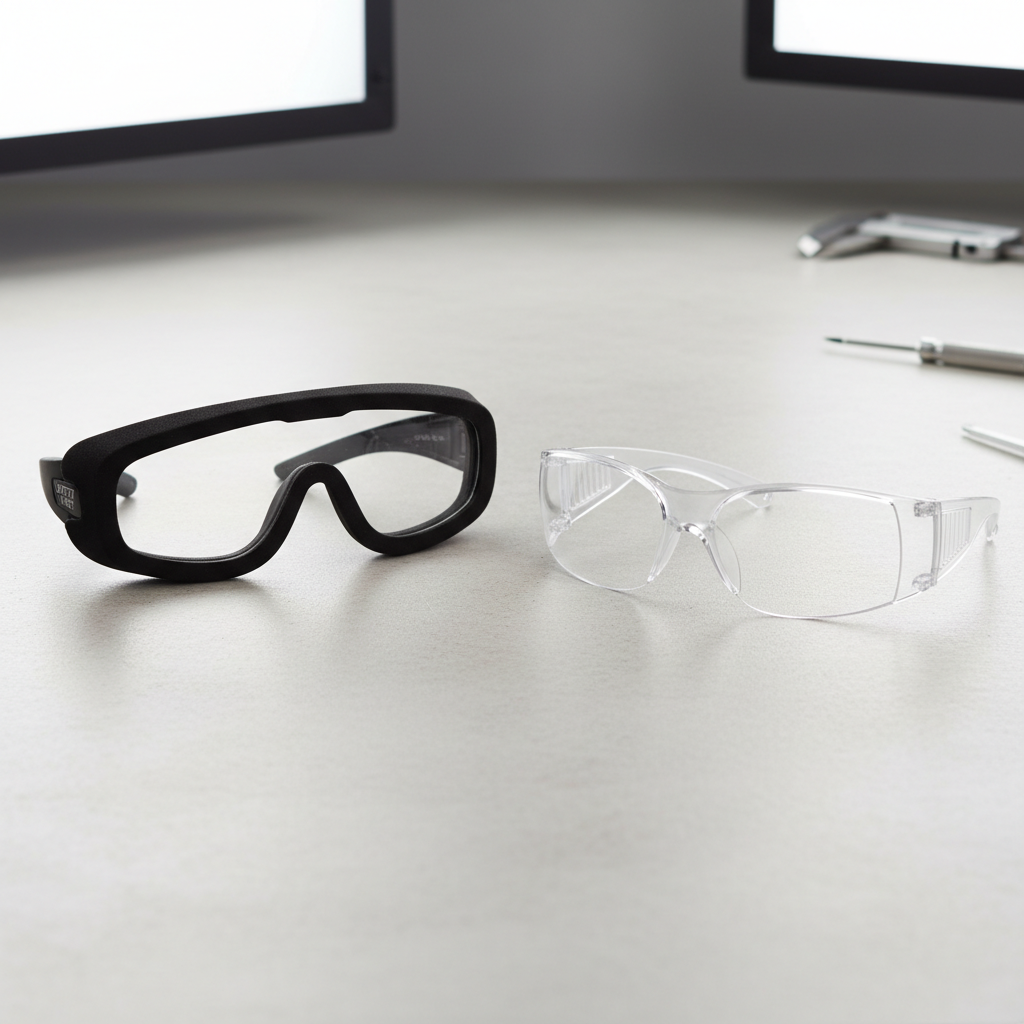
If you checked two or more boxes, you’re not “picky,” you’re just in the group that benefits from a more specialized style.
Recommended picks by scenario (what to buy, not just what to like)
I’m not going to pretend there’s one perfect model for everyone. Instead, here are practical categories that typically perform well for power tool work, plus what to look for on the product page.
1) Everyday shop work: lightweight wraparound Z87.1 glasses
If you mainly drill, drive, cut wood, and do general DIY, this category usually wins on comfort and convenience, so you keep them on.
- Look for: Z87.1 marking, wraparound lens, soft nose pads, thin temples for earmuffs.
- Nice upgrades: Hard coat for scratch resistance, anti-fog if you run hot.
2) Dust-heavy work: indirect-vent goggles for sanding and drywall
Fine dust sneaks around frames and irritates eyes, even if the impact risk feels low. Goggles with indirect vents tend to block dust better while still reducing fog compared with fully sealed designs.
- Look for: Indirect venting, anti-fog coating, wide field of view, strap that doesn’t slip.
- Reality check: Some fog is still possible in humid conditions, so fit plus airflow matters.
3) High-risk debris: gasketed safety glasses for grinding and cutting
For grinders, cutoff wheels, and wire wheels, open sides are where problems start. Foam-gasketed glasses (or slim goggles) reduce side entry without feeling as bulky as full goggles.
- Look for: Removable gasket for cleaning, Z87.1 marking, secure wrap, compatibility with face shields.
- Smart combo: Glasses or goggles plus a face shield for spark and fragment management.
4) Outdoor + sun: tinted or polarized safety glasses (when appropriate)
For deck builds, yard tool repairs, or masonry outdoors, glare fatigue is real. A gray tint keeps colors more natural; polarized lenses cut reflection, but can interfere with reading some screens or seeing certain stress patterns.
- Look for: UV protection claims from reputable manufacturers, Z87.1 compliance, stable fit in sweat.
- Keep a clear backup: You’ll want it when light drops or you move indoors.
Fit and comfort: the part that decides whether you actually wear them
Even the best safety glasses for power tools fail if they slide down, pinch, or leave gaps. Fit is not vanity, it’s coverage.

Try this quick fit test before you commit to a long project:
- Look down and shake your head: If frames slide, you’ll keep touching them with dirty gloves.
- Check eyebrow gap: Big gaps invite falling dust when you’re overhead drilling or sanding.
- Wear your hearing protection: Temples should not break the earmuff seal or create hotspots.
- Mask/respirator test: If exhaled air shoots into lenses, fog will follow. Adjust nose bridge, try a different frame profile, or switch to goggles.
Small but important: If you’re between sizes, many people do better with “small/medium” frames than forcing a wide frame that sits low and leaves side gaps.
Practical buying checklist (so you don’t overpay or underbuy)
When you’re scanning product listings, use this list to keep it simple.
- Confirm compliance: ANSI/ISEA Z87.1 marking on lens/frame, not just “meets ANSI” in marketing copy.
- Pick the right style for the hazard: Wraparound for general, goggles for dust, gasketed for high-speed debris.
- Choose lens tint intentionally: Clear indoors, gray outdoors, amber for contrast in low light. Don’t buy mirrored just for looks.
- Coatings: Hard coat helps scratches, anti-fog helps adherence. Some coatings clean differently, follow maker guidance.
- Plan for backups: A spare pair matters more than premium features when you’re mid-project and a lens gets gouged.
Mistakes that make safety glasses “not work”
Most complaints are predictable. Fixing them usually costs less than buying a third random pair.
- Using open-frame glasses for grinding: Debris enters from below or the side, even with good front impact protection.
- Cleaning lenses with a shirt or paper towel: Micro-scratches build fast, glare increases, you stop wearing them.
- Chasing anti-fog without fixing airflow: If your mask vents straight upward, fog will keep winning.
- Ignoring compatibility: Earmuffs + thick temples equals pressure pain, then glasses come off “just for this cut.”
- Wearing damaged eyewear: Cracked lenses and bent frames can reduce protection and visibility, replace when compromised.
According to NIOSH, eye protection should be selected to match the hazard and used consistently, which sounds obvious, but the consistency part often hinges on comfort and visibility, not motivation.
When to step up: face shields, prescription safety, and pro advice
There are situations where glasses alone feel like a compromise.
- Face shield layering: For many grinding/cutting tasks, a face shield over Z87.1 eyewear adds coverage for fragments and splash. A shield is typically an extra layer, not a replacement for glasses.
- Prescription safety eyewear: If you wear Rx daily, consider dedicated safety-rated prescription frames. Over-glasses can work, but they often increase fog and reduce comfort.
- Medical concerns: If dust exposure triggers significant irritation, dryness, or recurring redness, it’s reasonable to talk with a healthcare professional, because protective eyewear choice is only one part of the solution.
- Jobsite requirements: If you’re on a regulated site, your safety manager or employer may specify ratings, side shields, or full-seal designs.
Conclusion: the “best” pair is the one you keep on
The best safety glasses for power tools in 2026 aren’t automatically the most expensive, they’re the pair that matches your hazard level and stays comfortable for the whole task. If you do general cutting and drilling, start with Z87.1 wraparound glasses with solid side coverage. If dust or grinding is common in your workflow, step up to goggles or gasketed designs and make sure they play nicely with your mask and hearing protection.
Your next move: pick one primary pair for your most common task, then add a second “special duty” option for either dust-heavy sanding or high-debris grinding, whichever you do more.
FAQ
Are Z87.1 safety glasses enough for all power tools?
Z87.1 is a strong baseline for impact, but it doesn’t guarantee the style blocks side and bottom entry. For grinding or heavy dust, many people do better with gasketed glasses or goggles, sometimes paired with a face shield.
What lens color should I choose for indoor workshop use?
Clear lenses are usually the simplest and most accurate for color and lighting indoors. If you struggle with contrast, a light amber tint can help in some shops, but it’s not universal.
How do I stop safety glasses from fogging with a dust mask?
Fog often means exhaled air is venting upward. Try adjusting the mask nose wire, choosing frames with a better bridge fit, or switching to goggles with anti-fog and indirect vents. In stubborn cases, a different mask style may help.
Do I need goggles for sanding wood?
Not always, but if you frequently feel fine dust in your eyes or you sand overhead, goggles (or at least a more sealed design) tend to be more comfortable long-term. Your environment and dust extraction setup matter a lot.
Can I wear contact lenses under safety glasses?
Many people do, but contacts can feel dry faster in dusty airflow. If irritation is frequent, consider more sealed eyewear and talk with an eye care professional for personalized advice.
Are anti-scratch and anti-fog coatings worth paying for?
Usually yes if you wear glasses for long sessions. Anti-scratch helps maintain clarity over time, while anti-fog helps compliance because you’re less tempted to remove eyewear. The catch is coatings vary by brand, so care instructions matter.
Should I replace safety glasses after they get scratched?
Deep scratches and haze reduce visibility and can add glare, which increases mistakes around power tools. If you notice distortion or you keep taking them off because they “look bad,” replacement is typically the safer call.
If you’re trying to choose between a few models and want a quicker path, narrow it to your top two tasks, then pick one comfortable daily pair plus one higher-coverage option for your messiest tool, it’s a simple setup that tends to stick.