
circuit tester pen home use usually comes down to one simple need: you want to know whether an outlet, wire, or breaker is energized before you touch anything.
That sounds basic, but most DIY mistakes happen in the “I thought it was off” moment. A tester pen can help you avoid surprises, confirm a shutoff, and troubleshoot common outlet issues without turning your home into a weekend-long project.
One quick clarification up front, a “tester pen” can mean two tools: a non-contact voltage tester (NCVT) pen that detects electric fields, or a pen-style probe that needs contact with metal. For home outlets, most people mean the non-contact style, and that’s what this guide focuses on.
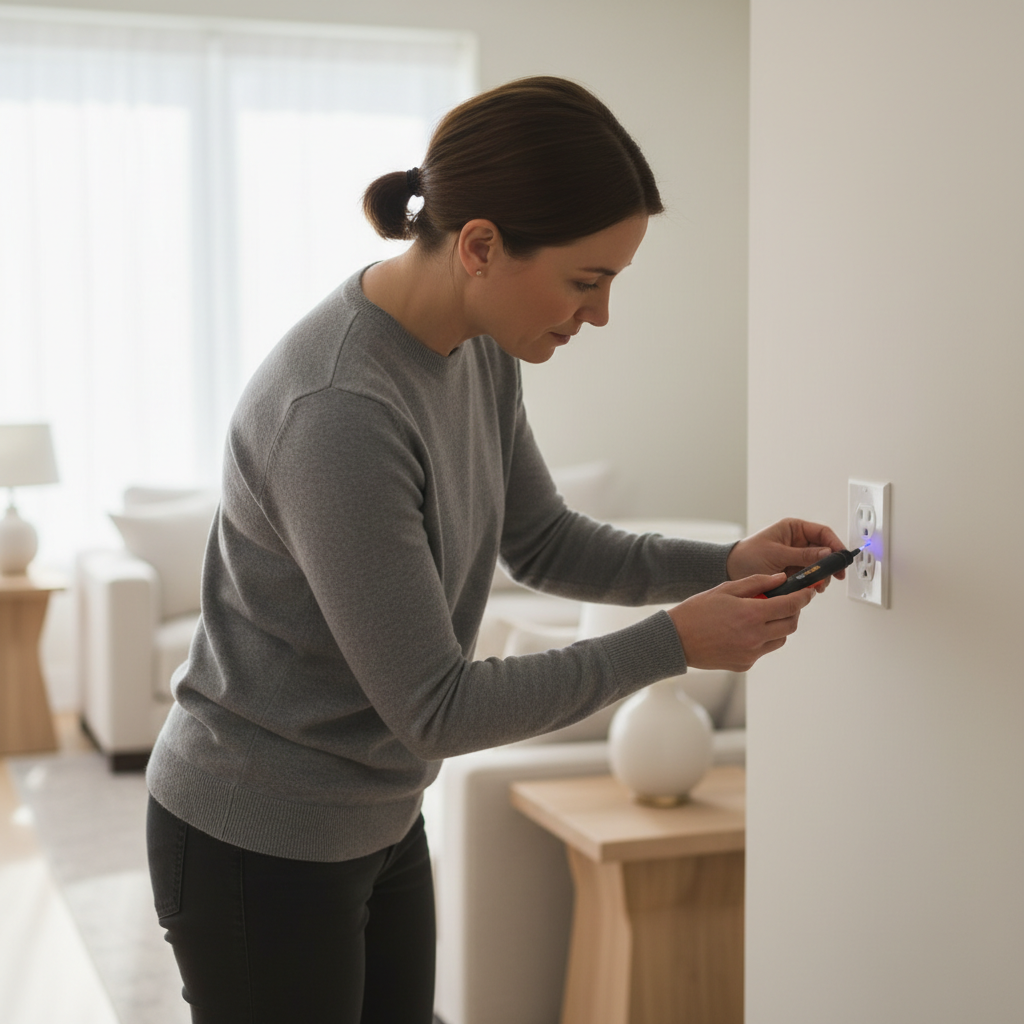
You’ll see practical ways to test outlets, what different signals often mean, how to reduce false readings, and when it’s smarter to stop and bring in a licensed electrician.
What a circuit tester pen can (and can’t) tell you
A tester pen is great for quick checks, but it is not a full diagnostic tool. Think of it as a fast “is there likely voltage here?” answer, not a detailed report.
- Good at: confirming an outlet cover screw or nearby wire is likely energized, checking if a breaker shutoff worked, finding a “hot” conductor in a bundle.
- Not great at: verifying a solid ground, measuring exact voltage, confirming correct hot/neutral wiring, detecting certain fault conditions.
According to OSHA, verifying de-energization is a key part of electrical safety, and proper testing methods matter. In a home setting, your goal is similar, reduce assumptions, increase confirmation.
Why outlets “seem dead” (or “seem live”) in real homes
If you’ve ever checked an outlet and got confusing results, you’re not alone. A circuit tester pen home use scenario often involves messy realities: shared neutrals, backstabbed outlets, bootleg grounds, older wiring, and devices that leak tiny currents.
Common reasons you get odd readings
- Phantom voltage: non-contact testers may pick up induced voltage from nearby energized wires, especially in bundled cables.
- GFCI behavior: a tripped GFCI upstream can kill power to multiple downstream outlets, and it’s not always obvious which one controls what.
- Switched outlets: half-hot receptacles controlled by a wall switch can look inconsistent.
- Loose connections: a worn receptacle or loose backstab can intermittently energize under no load but fail under load.
- Old or mixed wiring: older homes can have multi-wire branch circuits or non-standard changes from past repairs.
Quick self-check: is a tester pen enough for your situation?
This is the “don’t overthink it” checklist. If you’re only confirming whether something is likely live before you proceed, a pen is often fine. If you’re troubleshooting a persistent outlet problem, you may need more.
- Pen is usually enough if you’re: confirming a breaker shutoff, checking a lamp cord or outlet face for presence of voltage, finding which cable is hot in a box before you label it.
- Add a plug-in receptacle tester if you’re: checking open ground, reversed polarity, or GFCI function on typical 120V outlets.
- Consider a multimeter if you’re: diagnosing intermittent power, measuring line vs load, verifying neutral issues, or checking voltage drop.
- Call a pro if you’re: seeing heat marks, buzzing, burning smell, tripping breakers repeatedly, or you’re unsure which circuit you’re on.
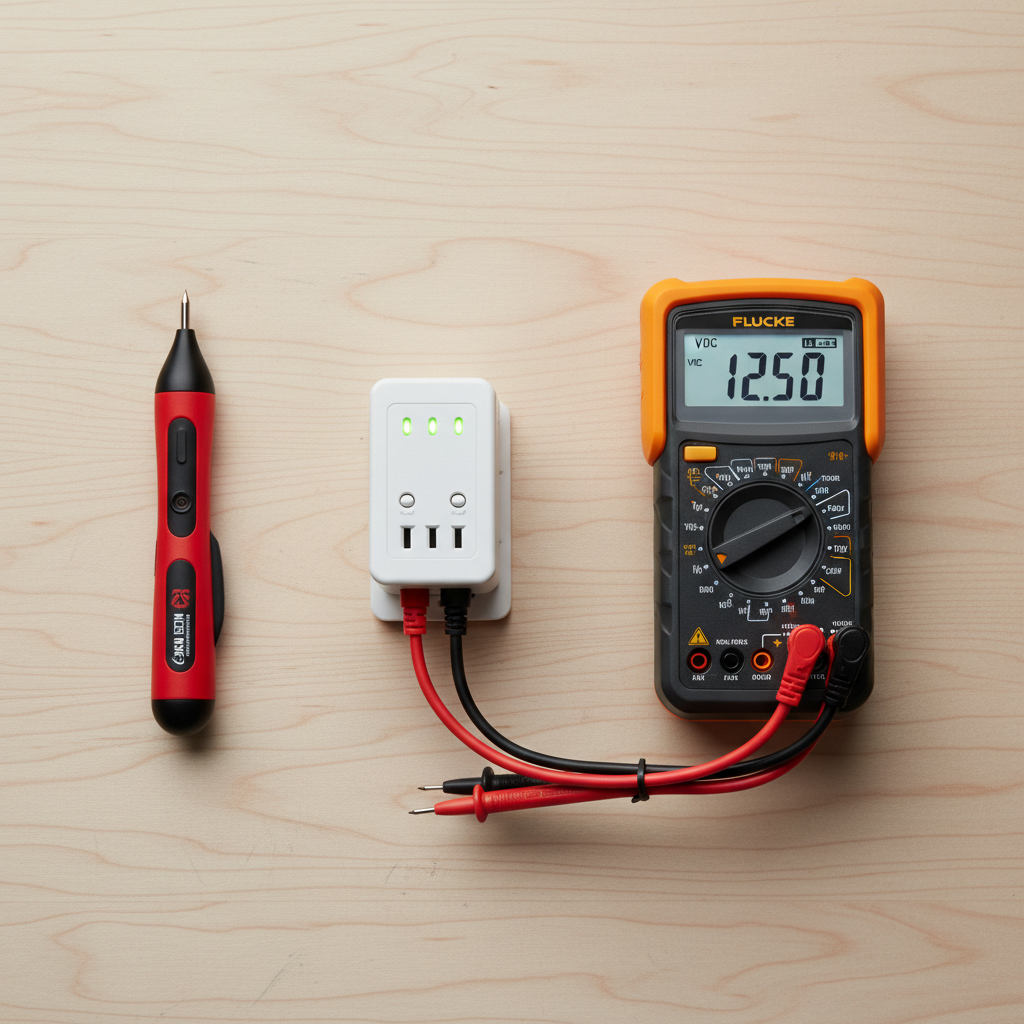
How to use a circuit tester pen on outlets (step-by-step, safely)
Before you start, remember a pen can be fooled. Your job is to use it in a way that reduces guesswork.
Step 1: Verify the pen works (don’t skip)
Touch the tester near a known live source, like a lamp that’s on or an outlet you know is powered. If it doesn’t alert there, treat it as unreliable until you replace batteries or test another known live point.
Step 2: Check the outlet face and the surrounding area
Move the tip near the hot slot area (the narrower slot on standard US outlets) and near the cover screw. Keep your hand steady, and note whether the signal is strong or faint, many pens vary by model.
Step 3: Confirm your shutoff at the panel
Turn off the suspected breaker, then retest the same outlet. If your tester still shows voltage, you may be on the wrong breaker, or you may be seeing induced voltage, so don’t assume it’s safe yet.
Step 4: If you’re opening the box, re-check inside
After removing the cover plate, check near each conductor before touching anything. Keep in mind that a non-contact pen can light up near multiple wires if they run close together.
- Practical habit: check, shut off, check again, then check one more time after the cover comes off.
According to NFPA, electrical hazards at home can be serious, and the safest path is reducing exposure and verifying power status before contact. If any step feels uncertain, pause and reassess.
Interpreting results: what different signals often mean
Different brands signal differently, but the patterns below are what homeowners usually run into with circuit tester pen home use.
| What you see | What it often indicates | What to do next |
|---|---|---|
| Strong alert at outlet, consistent | Likely energized circuit | Shut off breaker and retest; confirm with a plug-in tester if wiring correctness matters |
| Faint or intermittent alert | Possible induced/phantom voltage or nearby energized cable | Change position, retest; if opening a box, treat as potentially live until confirmed by contact method |
| No alert, but devices still work | Pen failure, dead battery, or technique issue | Test on a known live source; replace batteries or use another tester |
| No alert and outlet is dead | Could be tripped GFCI, open hot, loose connection, or breaker issue | Check GFCI reset locations; inspect upstream outlets; consider electrician if unsure |
Common mistakes that waste time (or create risk)
A tester pen is simple, which makes it easy to over-trust. Most issues come from two habits: skipping the “known live” check, and treating a no-signal reading as a guarantee.
- Using it on the wrong surface: testing only the plastic face can reduce sensitivity, aim near openings or screws where appropriate.
- Not understanding proximity: the pen may detect voltage in the wall cavity even when the outlet you want is off.
- Assuming it proves the circuit is safe to touch: non-contact detection is not the same as confirming de-energization with a proper method.
- Ignoring heat or noise: warm outlets, crackling, or buzzing deserve extra caution and often a professional look.

Practical buying guide: choosing a tester pen for home outlets
Not every pen behaves the same. Some are too sensitive for tight wiring bundles, others miss lower signals. When you shop, focus on features that improve confidence, not gimmicks.
- Clear alert system: loud beep and bright light helps in daylight and noisy rooms.
- Auto power-off: reduces “dead battery when you need it” moments.
- Rated for common residential voltage: look for typical 90–1000V AC detection range for NCVT models, and read the manual for limitations.
- CAT rating guidance: many reputable electrical tools include measurement category info; if you’re unsure, pick well-known brands and buy from reliable retailers.
- Comfort and clip: you’ll actually carry it, which matters more than people admit.
Key point: If your plan includes verifying wiring correctness, add a plug-in receptacle tester, a pen alone won’t tell you hot/neutral reversal with confidence.
When to stop DIY and call an electrician
Some outlet problems look simple but hide a bigger issue upstream. If any of the items below show up, it’s usually worth professional help, even if you’re comfortable with basic tools.
- Breaker trips repeatedly, especially right after reset
- Outlet or cover plate feels warm, or you notice discoloration
- Buzzing, crackling, or a burning smell
- Multiple outlets dead in a pattern you can’t map
- You suspect aluminum wiring, knob-and-tube, or prior DIY splices
According to CPSC, electrical products and household wiring issues can contribute to fires and shocks, and caution is warranted when warning signs appear. If you’re uncertain, a licensed electrician can verify the circuit condition and code compliance.
Closing thoughts: making a tester pen part of safer home habits
A circuit tester pen home use routine works best when you treat the pen as a quick screening tool, then confirm with the right follow-up when the stakes rise. Used that way, it saves time, prevents surprises, and helps you work more calmly.
If you do one thing after reading this, keep your tester pen somewhere you’ll actually grab it, then build the habit of checking it on a known live outlet before every job.
FAQ
Can a circuit tester pen tell me if an outlet is wired correctly?
Not reliably. A pen can suggest that voltage is present, but it typically can’t confirm correct hot/neutral/ground relationships. For that, a plug-in receptacle tester is a better quick check, and a multimeter is more definitive.
Why does my tester pen beep near an outlet even when the breaker is off?
This can happen with induced or phantom voltage from nearby energized cables, or because you shut off the wrong circuit. Retest at the panel, confirm with a known live outlet, and if you’re opening the box, treat it as potentially live until verified by a more direct test.
Is a non-contact tester pen safe to use for home DIY?
It’s generally designed for that kind of screening, but safety depends on using it correctly and not over-trusting a single tool. If you’re unsure, consider adding a receptacle tester or asking an electrician, especially for repeated problems.
Do I need to turn off power before using the pen?
No, you can use it to check whether power is present. The bigger rule is what you do next, if you plan to touch conductors or remove an outlet, shut off power and confirm the shutoff.
My outlet is dead, what should I check first?
Start with the simple stuff: check the breaker, then look for a tripped GFCI outlet in the same area or a bathroom, garage, kitchen, or outdoors. If resets don’t hold, or multiple outlets are involved, it may be time for a professional diagnosis.
What’s the difference between a tester pen and a multimeter?
A tester pen detects the presence of voltage without contact in many cases. A multimeter measures voltage and can help pinpoint wiring faults, but it requires more careful technique and direct contact with test points.
If you’re trying to pick a tester pen for regular household checks, or you want a simple outlet-testing setup that covers more than “is it live,” it can help to choose a pen and a plug-in tester as a small kit, it’s usually a more practical combo than chasing one tool that does everything.