
glue gun small craft hot is usually what people search right after they’ve dealt with glue strings everywhere, burnt fingertips, or a bond that pops off the next day.
A small hot glue gun can be a great tool for quick DIY, school projects, and light repairs, but “small” doesn’t automatically mean “better.” The sweet spot is matching the gun’s temperature and wattage to your materials, then using a couple of simple habits that keep beads neat and adhesion strong.
This guide breaks down what actually matters when buying, how to tell if your current tool is the problem, and the little technique tweaks that make hot glue look clean instead of crafty-in-a-bad-way.
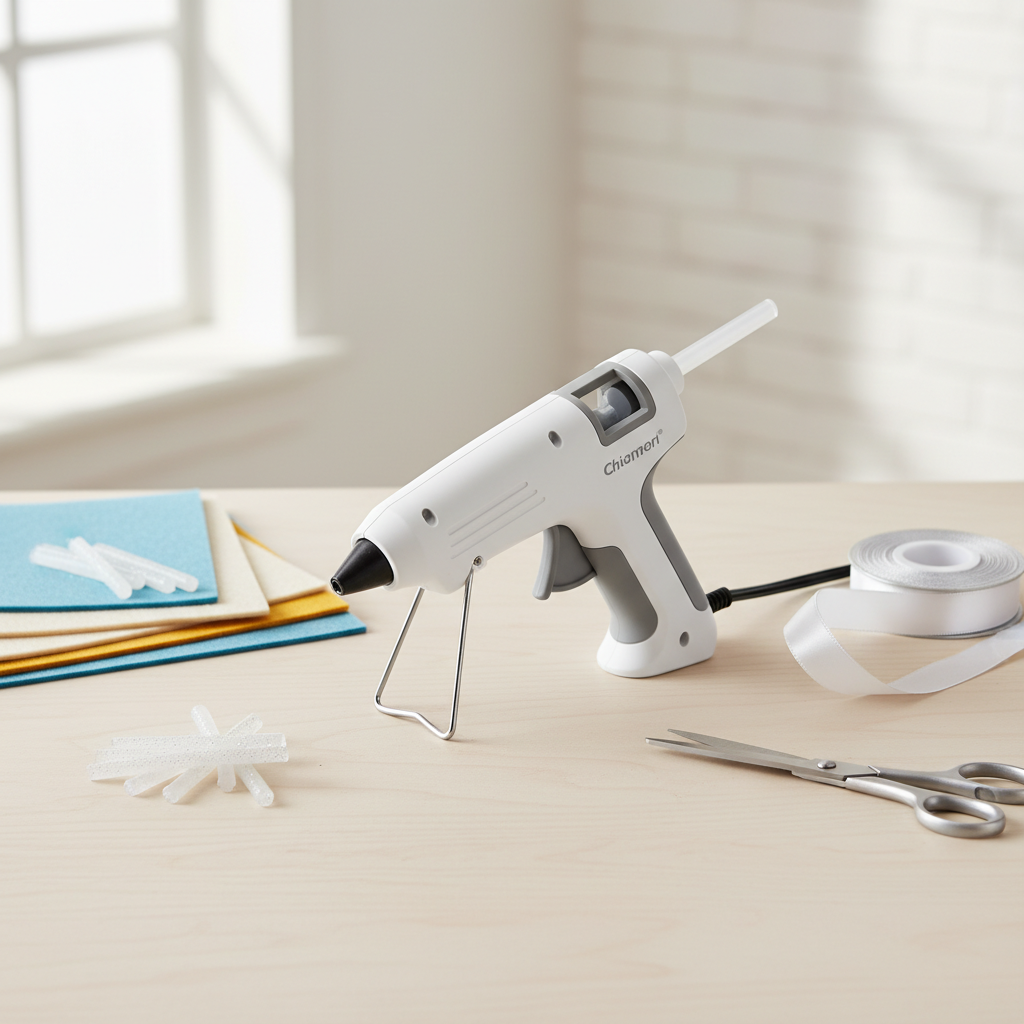
What “small craft hot glue gun” really means (and why it matters)
In most listings, “small” points to mini glue guns that use thinner sticks (often called mini sticks) and run at lower wattage than full-size models. They’re popular because they’re lighter, easier to control, and less intimidating for quick projects.
But the trade-off is real: mini guns typically deliver less glue per minute and can struggle with thick materials or larger surfaces where you need a longer open time before the glue skins over.
- Mini / small guns: best for paper crafts, felt, foam board edges, small wood pieces, ornaments, quick tacks.
- Full-size guns: better for bigger seams, heavier decor, larger wood joints, anything that needs more glue volume.
For many households, the “right” setup ends up being one dependable mini gun for daily crafts, plus a higher-power option if you do decor builds or frequent repairs.
Why your glue jobs fail: the common causes in real projects
When hot glue doesn’t hold, it’s usually not because the glue is “bad.” It’s more often a mismatch between temperature, surface type, and timing.
1) The material doesn’t like hot glue
Hot glue bonds best when it can slightly wet into the surface texture. Very smooth plastics, silicone, waxy finishes, and dusty surfaces often resist adhesion.
2) Glue is too cool (or the gun can’t keep up)
Mini guns sometimes drop temperature during long beads. The glue comes out thick, sets too fast, and never really “grabs.” If you’re constantly fighting the clock, that’s usually what’s happening.
3) You’re relying on hot glue for structural strength
Hot glue is great for tacking, positioning, and light-duty bonding. For load-bearing joints or high heat areas (car interiors, near appliances), it can soften and creep.
4) Surface prep is getting skipped
Finger oils, dust, and release agents from manufacturing are silent failures. A quick wipe can change everything.
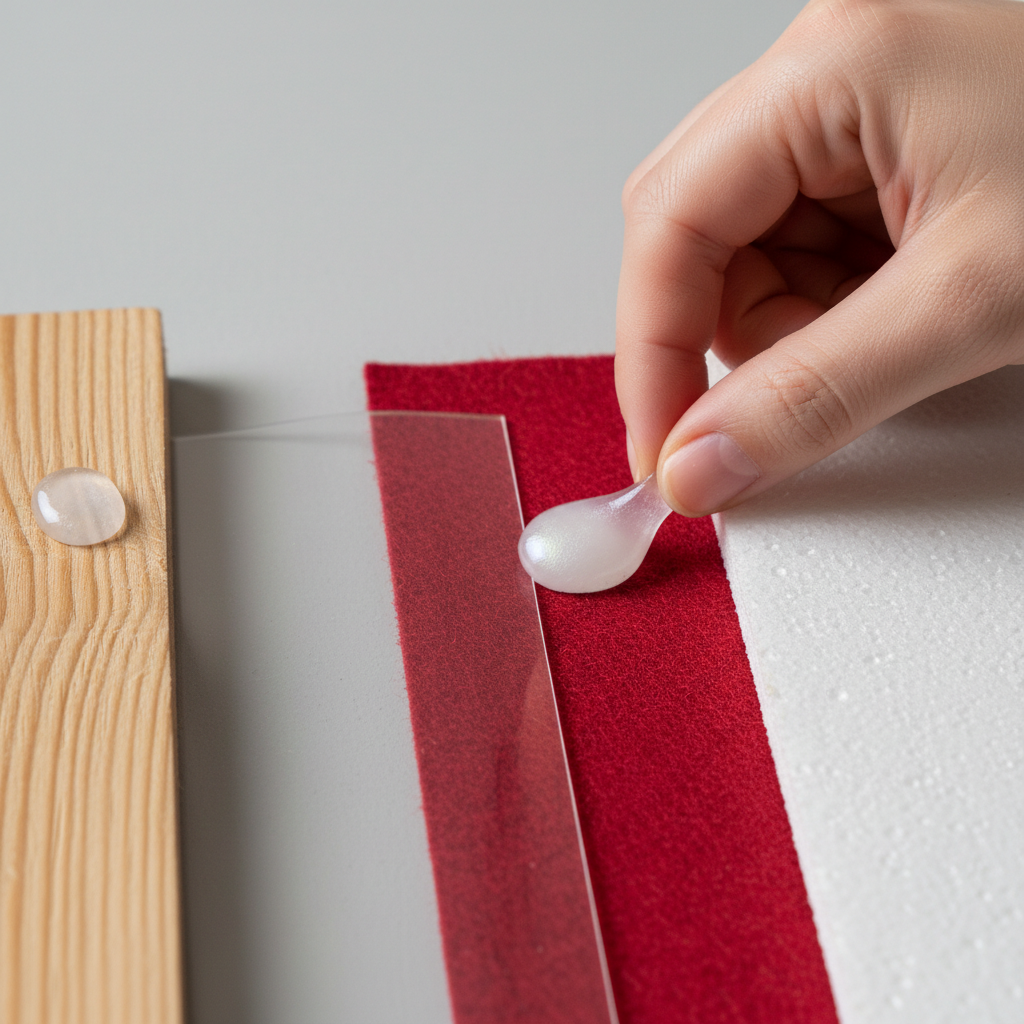
Quick self-check: are you using the right tool and glue sticks?
If you’re debating whether to replace your gun, this checklist gets you there faster than reading twenty product pages.
- You need cleaner lines: look for a smaller nozzle, steadier stand, and better trigger feel.
- You do delicate materials (foam, ribbon, lightweight fabric): a low-temp or dual-temp option usually behaves better.
- You do wood crafts or thicker items: higher wattage or high-temp modes often reduce “cold” glue failures.
- You hate strings: technique helps most, but stick quality and steady temperature also reduce cobwebbing.
- Your gun drips constantly: minor drip is normal, but excessive drip can mean overheated glue, worn nozzle seal, or leaving it idle too long.
One more tell: if your glue gun small craft hot setup works for tiny dots but fails on any bead longer than 2–3 inches, you’re likely underpowered for what you’re building.
Choosing a small hot glue gun: what to look for (without overbuying)
Shopping for a mini glue gun can feel like all the options are the same. They’re not, but the differences that matter are pretty specific.
| Feature | Why it matters | Good fit for |
|---|---|---|
| Low-temp vs high-temp vs dual-temp | Controls melting risk and working time | Low-temp for foam/fabric; high-temp for wood/light repairs; dual-temp for mixed crafts |
| Wattage (mini guns vary) | Higher wattage helps maintain heat during longer beads | Frequent crafting, longer seams, faster work pace |
| Nozzle shape and size | Better control reduces blobs and stringing | Fine details, small embellishments |
| Stand stability + drip tray | Prevents tip-overs and mess while heating | Small desks, shared spaces, classrooms |
| Cordless vs corded | Cordless is convenient but may have shorter runtime | Quick fixes, portability; corded for long sessions |
Also check stick size compatibility. Mini sticks are common, but not universal, and forcing the wrong diameter is an easy way to jam a gun.
How to use a mini glue gun for cleaner, stronger results
glue gun small craft hot projects look better when you treat hot glue more like a controlled bead, not a ketchup squeeze.
Prep in 60 seconds
- Dry fit parts so you know exactly where the bead goes.
- Wipe smooth surfaces with isopropyl alcohol if the material allows, then let it dry.
- Have clamps, clips, or a heavy object ready so you don’t “chase” the setting glue.
Run the bead like this
- Let the gun fully warm up, partial heat causes lumpy flow.
- Apply glue to one surface, then press and hold with steady pressure, small wiggles can break the bond as it cools.
- For longer seams, use short sections, press, then continue, especially with mini guns.
Reduce stringing without obsessing
- At the end of a line, slightly twist the nozzle and lift away in one smooth motion.
- Keep a silicone mat or scrap cardboard nearby to “park” the tip for a second.
- If strings happen, wait until cool, then peel, wiping while hot usually smears.
For decorations (like bows, gems, or small plastic bits), a tiny dot often holds better than a big blob because it cools evenly and doesn’t create a tall, brittle mound.
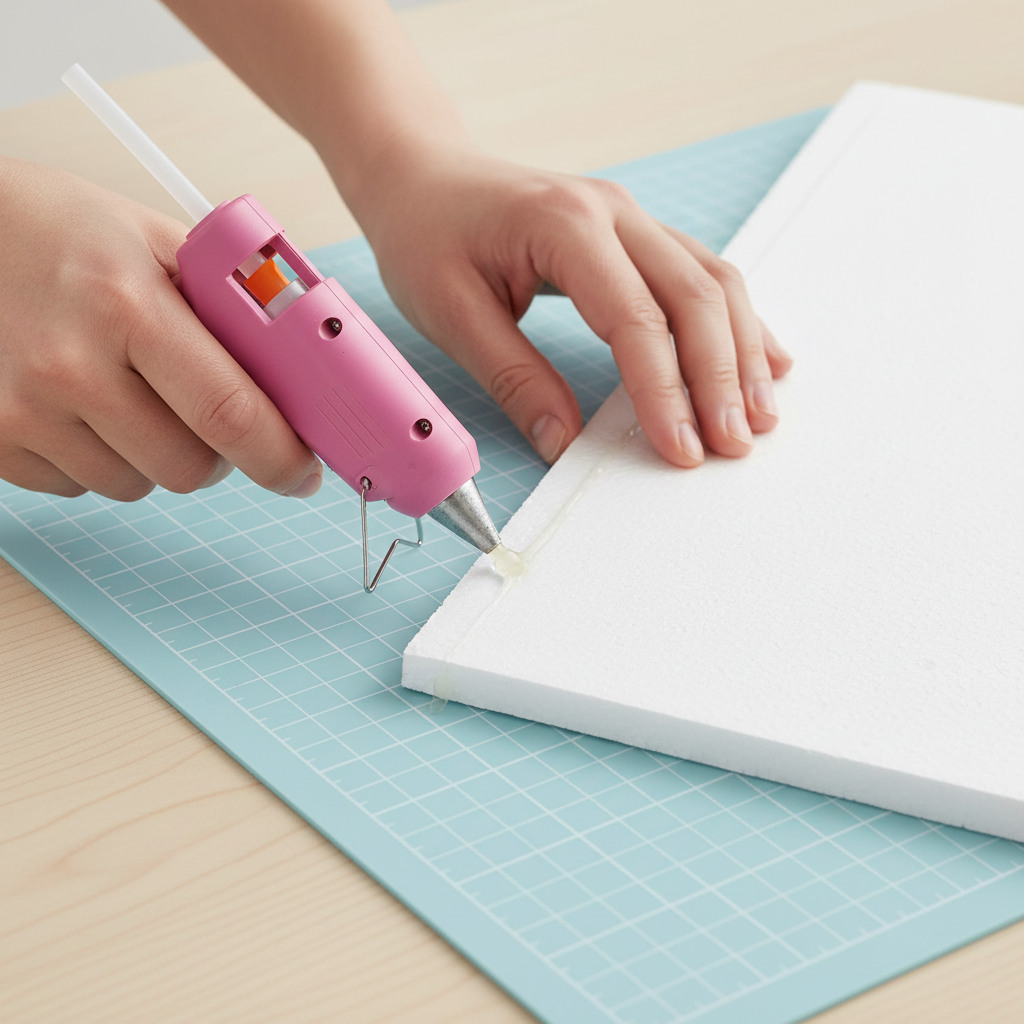
Safety and handling: what’s realistic to worry about
Hot glue is “craft safe” in the sense that it’s common, not in the sense that it can’t hurt. Burns are the obvious risk, and small guns can still get hot enough to cause injury.
According to U.S. Consumer Product Safety Commission (CPSC) guidance on consumer product safety, it’s smart to treat hot tools with the same basic habits as any heat source: stable placement, supervision around kids, and unplugging when not in use.
- Use a stand and a mat, tip-overs cause most messy accidents.
- Avoid touching fresh glue, it can stick to skin and hold heat longer.
- If you craft with children, adult supervision is still a good idea even with low-temp models.
- If you have a burn that looks serious or covers a large area, consider seeking medical advice.
Ventilation is usually fine for typical craft use, but if you’re working for long sessions or you notice irritation, moving to a better-ventilated area is a reasonable precaution.
Mistakes that waste glue sticks (and how to avoid them)
- Using hot glue on high-stress joints: for furniture or weight-bearing parts, consider wood glue, epoxy, or mechanical fasteners instead.
- Leaving the gun idling forever: it increases drip, darkens glue, and can shorten tool life.
- Over-gluing porous materials: thick blobs soak in and still pop off, try a thinner bead plus pressure.
- Skipping a test dot: when you’re bonding an unknown plastic, test first and see if it peels cleanly.
If you keep having failures on plastic packaging, glossy acrylic, or polyethylene-type plastics, it’s not you, those surfaces often need specialty adhesives or surface treatment.
Key takeaways (so you can decide fast)
- Match temperature to material: low-temp for delicate crafts, higher heat for wood and thicker items.
- Mini guns excel at control, but they can struggle with long beads and big surfaces.
- Prep and pressure beat “more glue” almost every time.
- If your glue gun small craft hot setup strings nonstop and bonds feel weak, you may need better sticks, steadier heat, or a step up in wattage.
Conclusion: a small hot glue gun can be the right tool, if you use it like one
A mini glue gun shines when the job is small, quick, and detail-heavy, and it’s frustrating when you ask it to behave like a full-size tool. Pick the temperature that matches your materials, keep beads smaller than you think, and treat surface prep as part of the craft, not an optional extra.
If you want a simple next step, do one quick test: glue a scrap of your real material, let it cool fully, then try to peel. That tiny experiment tells you more than the label ever will.
If you’re shopping, prioritize steady heating, a stable stand, and stick compatibility, then everything else becomes preference.
FAQ
- What’s the best small hot glue gun for crafts?
It depends on what you make most. For mixed materials, a dual-temp mini gun is often a practical choice, while detail crafters may care more about nozzle control and trigger feel than raw power. - Is low-temp hot glue strong enough for projects?
For many light crafts, yes, especially on porous surfaces like paper, felt, or unfinished wood. For heavier items or smooth plastics, you may need higher heat or a different adhesive type. - Why does hot glue peel off plastic?
Some plastics are naturally low-energy and resist adhesives. If your bond peels off cleanly with no tearing or residue, the surface likely isn’t compatible, and you may want epoxy or a plastic-specific glue. - How do I stop glue strings everywhere?
Warm the gun fully, use a steadier pull on the trigger, then twist-and-lift at the end of the bead. Stick quality and temperature stability can also reduce stringing. - Can I use a small glue gun on fabric?
Often yes for hems in a pinch, costumes, or decor accents, but it can create stiff spots and may not survive washing. If the fabric is for clothing or frequent laundering, a fabric adhesive may be more appropriate. - How long should hot glue cool before I move the piece?
Most small bonds set in seconds, but “set” isn’t the same as “strong.” For anything you’ll tug on, giving it a few minutes before stressing the joint is a safer habit. - Are cordless mini glue guns worth it?
They’re handy for quick placement work and portability. If you craft for long stretches, corded models tend to stay more consistent without downtime for recharging or reheating.
If you’re trying to pick a small glue gun for a specific material mix, or you keep getting weak bonds on one stubborn surface, it may help to list your main project types and materials first, then choose the temperature and wattage around that instead of chasing the most popular option.