
Outlet tester 3 wire tools are one of the quickest ways to spot common wiring problems, but they also get misunderstood a lot, especially when the lights don’t match what you expected.
If you’ve ever plugged one in, saw a weird light pattern, and wondered whether your outlet is dangerous or just “old house normal,” you’re not alone. A 3-wire outlet tester is simple by design, which is exactly why it’s useful, but that simplicity also creates blind spots.
This guide focuses on what a 3-wire electrical outlet tester can tell you, what it can’t, and how to use the results to decide your next step, whether that’s tightening a connection, adding a GFCI, or calling a licensed electrician.
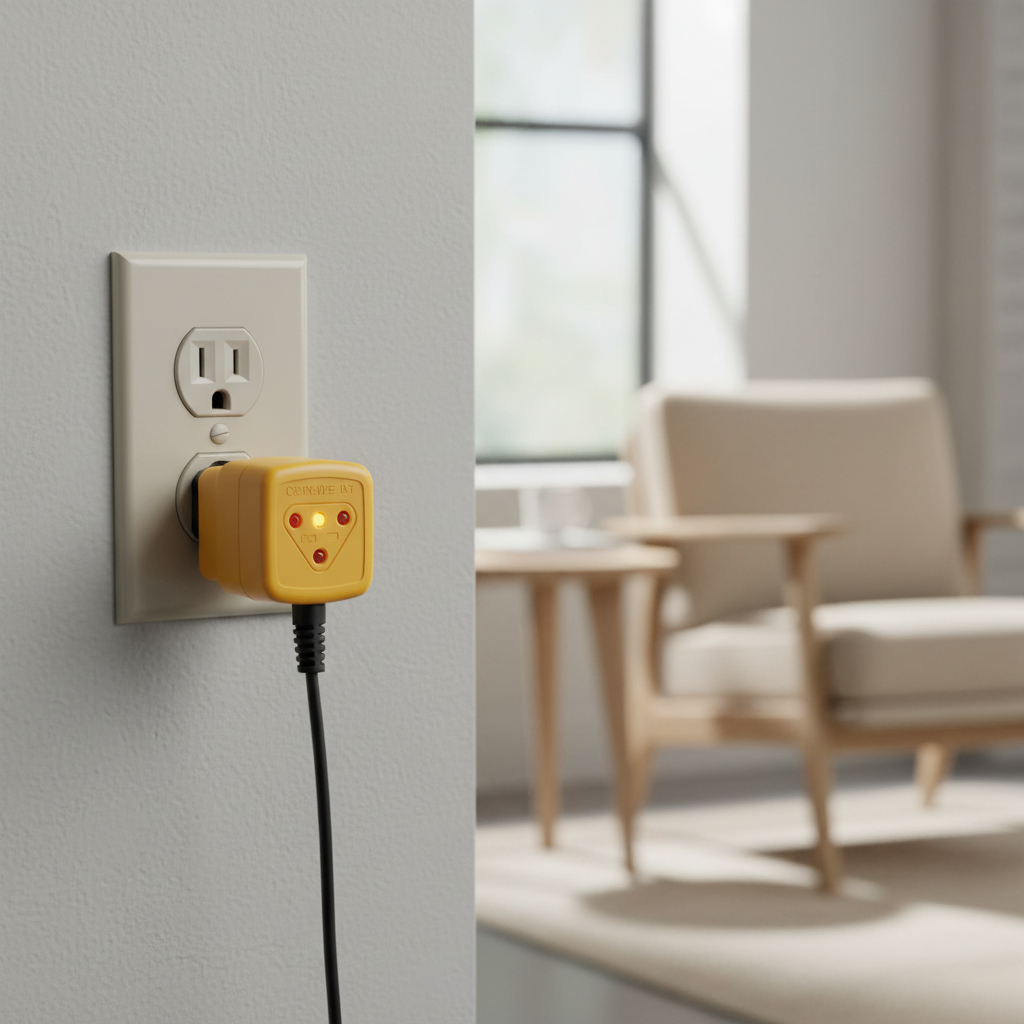
What a 3-wire outlet tester actually checks
A typical 3-prong outlet tester checks basic wiring conditions by reading voltage relationships between hot, neutral, and ground. That’s why it’s often called a “3 wire” tester, it assumes the circuit includes those three conductors.
Most models use a few neon/LED indicators and a printed legend to identify common faults. It’s a fast screening tool, not a full diagnostic instrument.
- Helps confirm whether hot/neutral/ground appear in the expected places
- Flags common mistakes such as open ground or reversed polarity
- Usually includes a GFCI test button on models that can trip a GFCI receptacle
According to NFPA (National Fire Protection Association), electrical safety at home depends heavily on proper installation and maintenance, and basic checks can help identify issues early, but anything beyond basic interpretation should be handled carefully.
Reading the lights: common patterns and what they usually mean
The exact light combinations vary by brand, so the legend on your tester matters more than any chart online. Still, these are the patterns homeowners most often run into and what they typically indicate.
| Typical tester result | What it often suggests | Why it matters |
|---|---|---|
| Correct wiring | Hot/neutral/ground appear normal | Good sign, but not a guarantee of perfect wiring |
| Open ground | No equipment ground present or ground not connected | Surge protection and fault clearing may not work as intended |
| Open neutral | Neutral disconnected somewhere on the circuit | Can cause strange behavior, flicker, or unsafe conditions |
| Open hot | No power reaching outlet (tripped breaker, bad connection) | Outlet won’t work, but upstream issue needs checking |
| Hot/neutral reversed | Polarity swapped at receptacle or upstream | Some devices become riskier to service; can be a code issue |
| Hot/ground reversed | Miswire involving ground path | Potential shock hazard, stop and investigate |
Key point: if your outlet tester 3 wire tool shows “open ground” in an older home, it might be accurately reporting an ungrounded circuit, but you still need to decide what you’ll do about it, especially in kitchens, baths, garages, and outdoors.
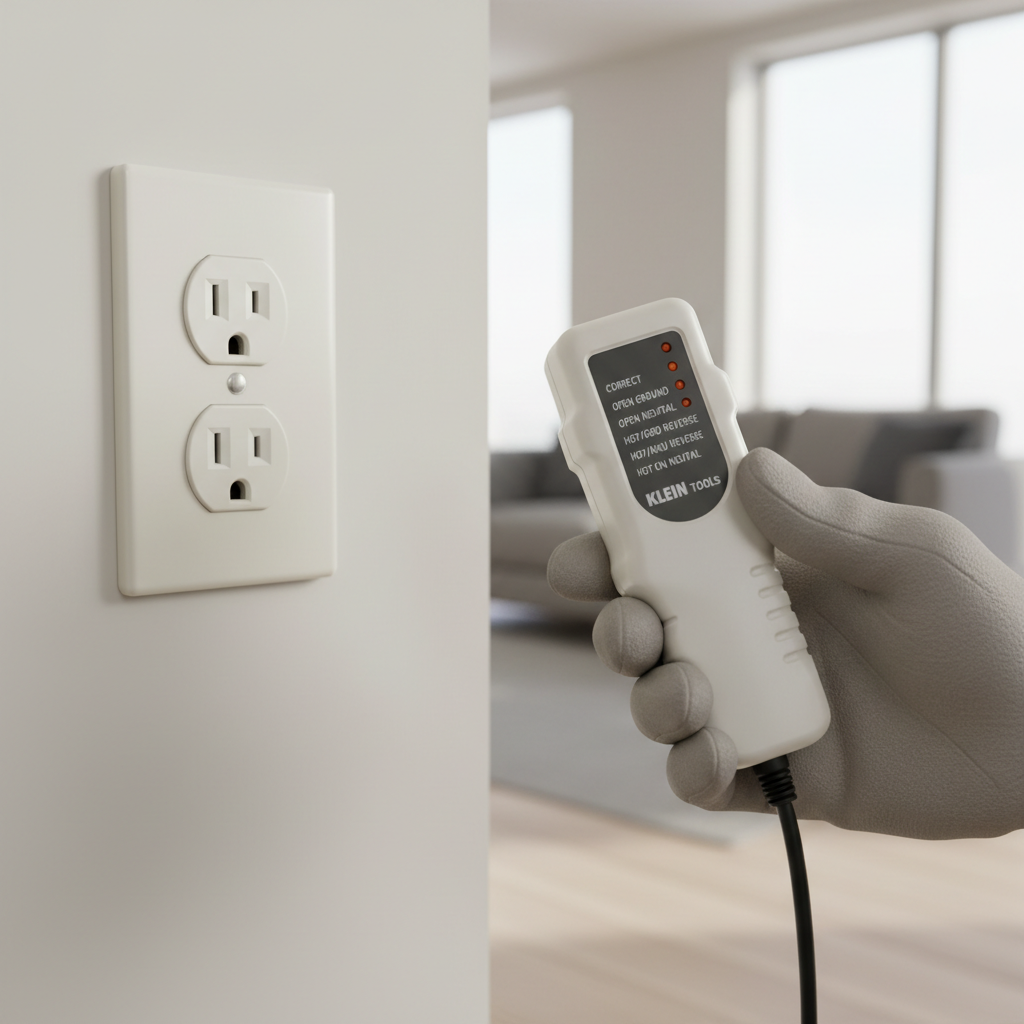
Why “open ground” shows up so often (and what it really means)
“Open ground” is the result that tends to spark the most worry, and also the most shrugging. In real homes, it shows up for a few different reasons.
- Older two-wire circuits: Many pre-1960s homes were wired without a ground conductor to receptacle boxes. Your tester is telling you the truth, there may be no ground to read.
- Ground wire exists but isn’t bonded: Loose ground screw, broken pigtail, or a metal box that isn’t properly bonded can trigger an open ground reading.
- Bootleg ground: Someone tied neutral to ground at the receptacle to “fake” a ground. Some testers may show “correct,” but it’s unsafe and not code-compliant in many situations.
According to ESFI (Electrical Safety Foundation International), proper grounding and GFCI protection are core parts of reducing shock risk. A tester can point you to an issue, but it can’t tell you whether a ground is legitimately present all the way back to the panel.
Quick self-check: are your results “DIY simple” or “pause and call”?
Before you start pulling outlets, do a quick reality check. This helps you avoid turning a small task into a weekend of guesswork.
Usually reasonable to keep testing (carefully)
- Only one outlet shows an odd reading, nearby outlets look normal
- “Open hot” and the breaker is tripped (and you know what caused it)
- A GFCI outlet won’t reset and your tester indicates no power downstream
Often a “stop and get help” signal
- Hot/ground reversed, or any pattern your legend flags as “danger”
- Open neutral on multiple outlets in the same area
- Warm outlet faceplate, buzzing, burning smell, or repeated breaker trips
- You see aluminum wiring, double-tapped breakers, or crowded/charred conductors in a box
Safety note: if you’re not comfortable identifying circuits at the breaker panel and confirming power is off, it’s usually smarter to stop at the testing stage and bring in a licensed electrician.
How to use an outlet tester 3 wire tool the right way (step-by-step)
Using the tester is simple, getting reliable information takes a tiny bit more discipline. Here’s a routine that works in most homes.
- Start with a known-good outlet in a newer area of the home, confirm the tester behaves as expected.
- Test the outlet you care about, note the light pattern exactly as shown on the legend.
- Test nearby outlets on the same wall and the other side of the wall, patterns often repeat on the same circuit.
- If your tester has a GFCI button, use it only on a GFCI receptacle (or a downstream receptacle protected by a GFCI upstream). Reset the GFCI after.
- Write it down (even quick phone notes): location, reading, and whether the outlet is on a switch.
According to U.S. Consumer Product Safety Commission (CPSC), electrical hazards can contribute to home fires and injuries, so treating odd readings as a prompt for careful follow-up is a practical approach.
What a basic 3-wire tester cannot tell you (important limitations)
This is where many people get misled: a “correct” reading does not mean the outlet is perfect, and a “fault” reading doesn’t always identify the root cause.
- No load testing: It typically doesn’t show voltage drop under real load, which matters for loose connections.
- Can miss a bootleg ground: Some wiring cheats can fool simple indicator logic.
- Doesn’t verify ground impedance: Ground path might exist but be ineffective.
- Limited on multi-wire branch circuits: Shared neutrals and certain panel issues need deeper troubleshooting.
If you need stronger confidence, a multimeter, a two-pole voltage tester, or professional diagnostic tools can provide more complete answers, and this is often where an electrician earns their fee.
Practical fixes by scenario (what people usually do next)
Once you’ve mapped a few outlets, you can pick a sensible next move. The “right” fix depends on location, usage, and whether you’re dealing with a grounded circuit.
If the tester reports hot/neutral reversed
- Turn off the breaker, confirm power is off with a non-contact tester and your outlet tester.
- Inspect the receptacle wiring: hot should typically be on the brass screw, neutral on the silver screw.
- If the box has multiple cables or backstab connections, consider switching to screw terminals or pigtails, many intermittent issues live here.
If the tester reports open ground
- Confirm whether the home has older two-wire cable; if so, a ground may not exist to “repair.”
- In many situations, adding GFCI protection can reduce shock risk even without a ground, but labeling requirements and code details vary, an electrician can advise.
- If a ground wire exists, check for loose ground connections or missing bonding jumpers in metal boxes.
If the tester reports open neutral or you see multiple weird readings
- Treat it as higher priority, neutrals that open intermittently can create unpredictable behavior.
- Check for a tripped GFCI upstream if multiple receptacles are dead.
- If the issue spans multiple rooms or circuits, involve a professional, the cause can be at a junction, device, or panel connection.
Key takeaways (so you don’t overthink it)
- An outlet tester 3 wire tool is a screening device, great for quick checks and mapping circuits.
- “Correct” lights are reassuring, not proof, loose connections and bootleg grounds can slip through.
- Open ground is common in older homes, the next step is about risk and code-appropriate upgrades.
- Open neutral and hot/ground issues deserve urgency, especially if symptoms repeat across outlets.
Conclusion: test, interpret, then choose the safest next step
A 3-wire electrical outlet tester gives you quick, readable signals, and for most homeowners that’s exactly the value: it turns “I have a bad feeling about this outlet” into a concrete next decision.
If your readings are consistent and minor, you can often move forward with careful troubleshooting, but when patterns suggest a neutral problem, miswired ground, or anything that feels unpredictable, it’s usually worth bringing in a licensed electrician rather than guessing.
Pick one action today: test the outlets in one room and write down the results, or schedule an inspection if the tester flags a high-risk pattern.
FAQ
What does “correct wiring” mean on a 3-wire outlet tester?
It usually means the tester detects hot, neutral, and ground in the expected relationship. It’s a good sign, but it doesn’t confirm wire tightness, ground quality, or code compliance in every case.
Why does my outlet tester show open ground in only one outlet?
That often points to a loose or missing ground connection at that device box, especially if nearby outlets read normal. It can also mean the outlet is on a different branch circuit than you assumed.
Can a 3-wire outlet tester detect a bootleg ground?
Not reliably. Some simple testers can be fooled if neutral and ground are tied together at the receptacle. If you suspect this, it’s a good reason to use a multimeter or involve an electrician.
Is it safe to use electronics on an outlet that reads “open ground”?
Many devices will still run, but protection and fault-clearing behavior may not work as intended. For sensitive electronics, surge protectors may be less effective without a real ground, and kitchens/baths usually deserve extra caution.
Why won’t my GFCI trip when I press the tester button?
Some testers don’t generate enough imbalance to trip certain GFCIs, and some circuits are wired in ways that affect the test. Confirm you’re actually on a GFCI-protected outlet and use the built-in GFCI “test” button as well.
What should I do if the tester shows hot/neutral reversed?
If you’re comfortable working safely with power off, you can inspect the receptacle wiring and correct the terminals. If multiple outlets show the same issue, it may be upstream, and a professional diagnosis is usually the safer path.
Do I need a multimeter if I already have a 3-wire outlet tester?
For basic screening, the tester is fine. If you’re troubleshooting intermittent problems, voltage drop, or suspect a wiring shortcut, a multimeter (or an electrician) gives more reliable answers.
If you’re testing a home, prepping for an inspection, or just trying to make sense of an outlet tester 3 wire reading that doesn’t match the label, it can help to use a checklist and a room-by-room map, and if anything looks high-risk or repeats across multiple outlets, getting a licensed electrician to verify the circuit often saves time and worry.